
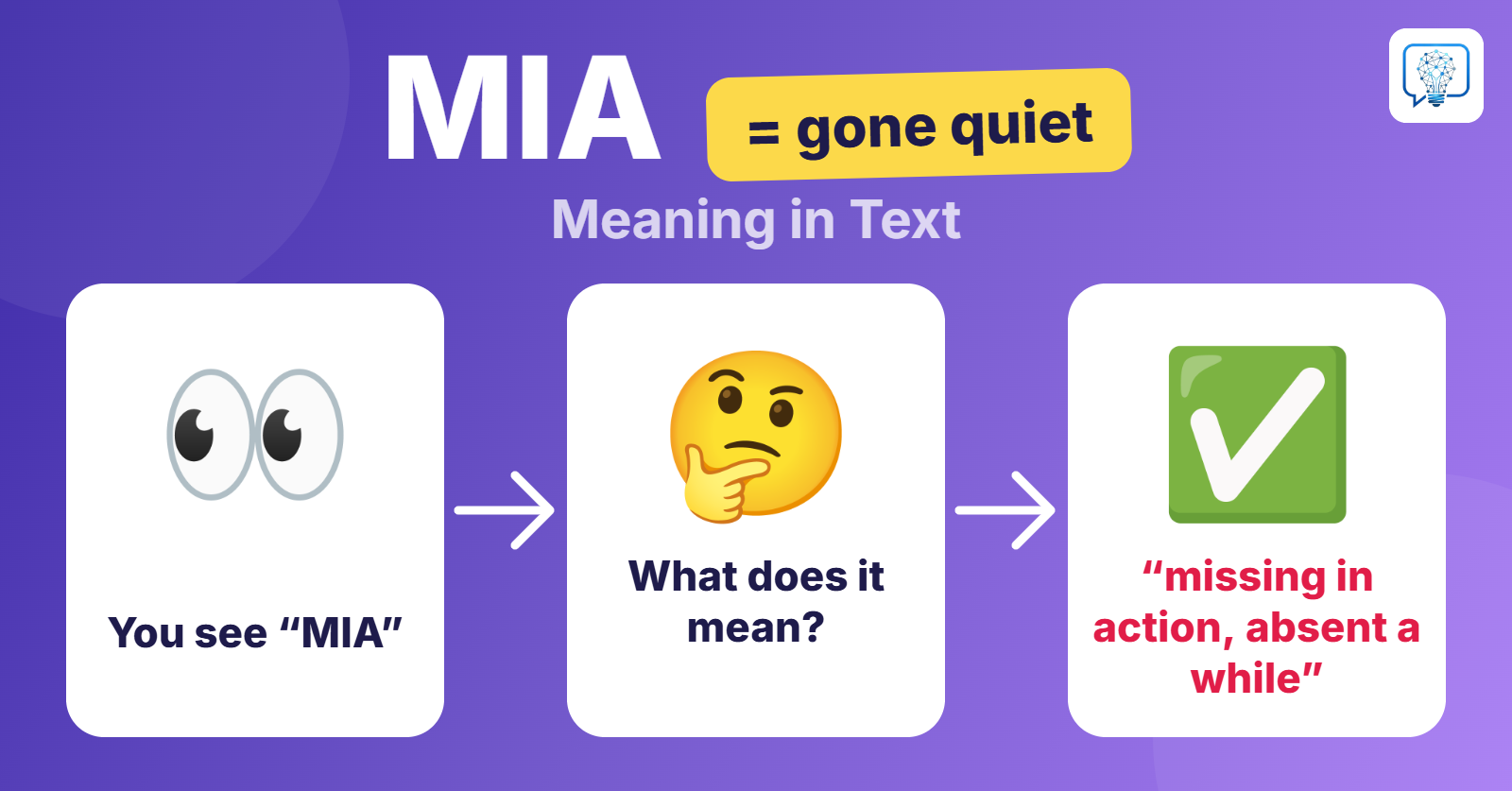
“where has she been, she’s been MIA all week.” Nobody thinks anything serious happened, it just means she’s been hard to reach.
Quick answer: MIA stands for “missing in action.” Wiktionary lists the original military meaning (a service member who didn’t return and wasn’t found), and notes it’s used “by extension” to mean absent for a long time in everyday language.
How MIA is used casually
| Use | Example |
|---|---|
| Someone who’s been quiet | “he’s been MIA since Monday” |
| Missing from a group chat | “why is she MIA lately?” |
| Missing an event | “you were MIA at the party last night” |
In its everyday use, MIA almost never means someone is actually in danger. It usually just means they’ve gone quiet, stopped replying, or skipped something.
Is it okay to call someone MIA?
It’s casual and usually light, but if you’re genuinely worried about someone, it’s worth checking in directly instead of just commenting that they’re MIA.
Real chat examples
- A: “haven’t heard from Sam in days”
- B: “yeah he’s been totally MIA”
- A: “sorry I went MIA, phone broke”
- B: “omg no worries, glad you’re back”