
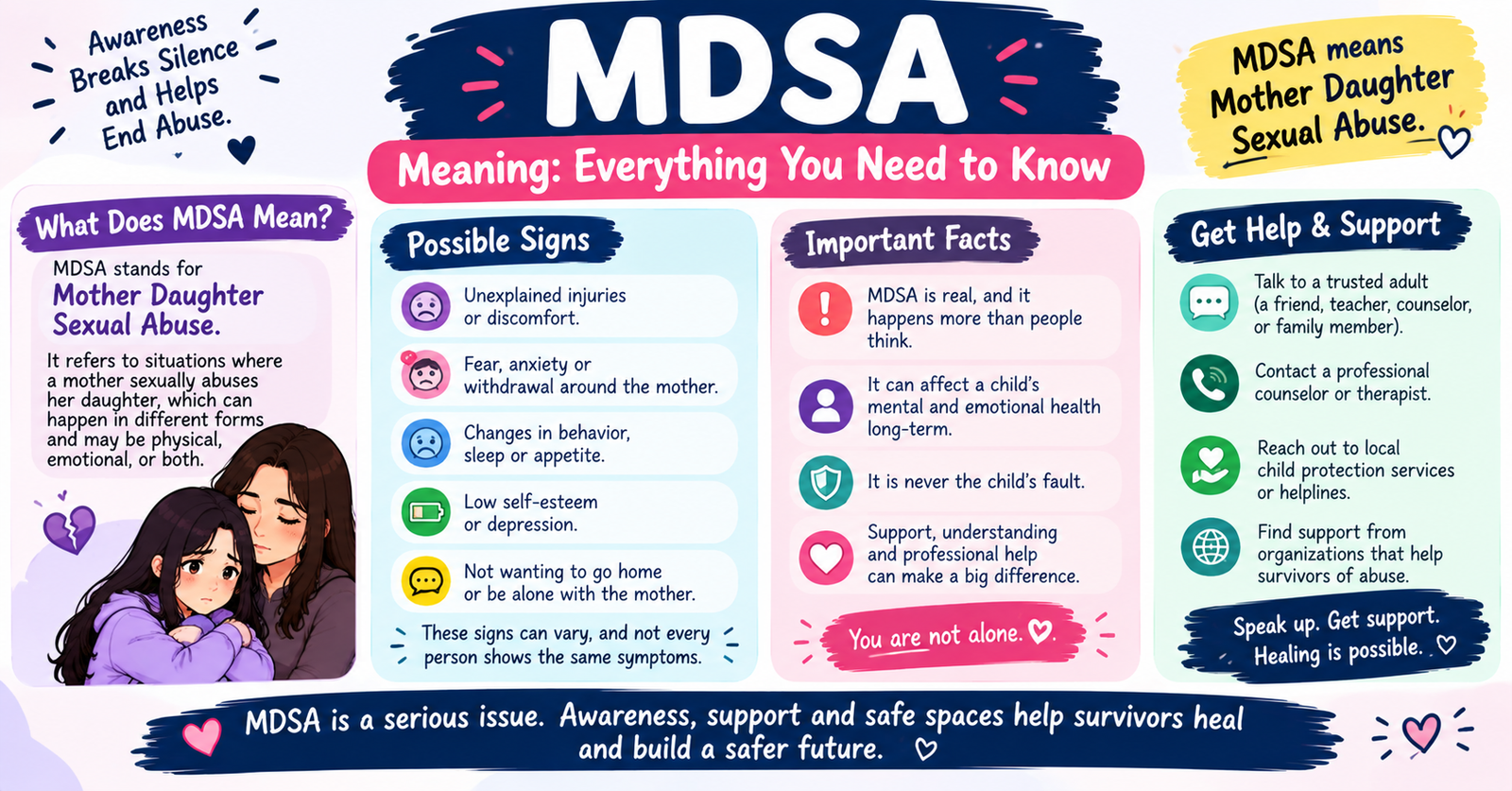
The MDSA meaning refers to mother-daughter sexual abuse, a serious but rarely discussed form of childhood sexual abuse. Many people search for this term without knowing exactly what it describes. Understanding the MDSA meaning helps survivors, parents, and professionals recognize signs they might otherwise miss. This guide breaks it down clearly and factually.
Unlike common internet acronyms, the MDSA meaning points to a real and painful family dynamic, not casual slang. It’s often overlooked because society expects mothers to protect, not harm. This article explains what MDSA really means, why it stays hidden, and where survivors can turn for real support.
If you’re reading this because something doesn’t feel right in your own life or a loved one’s, you’re not overreacting. Keep reading.
Understanding MDSA
What Is MDSA?
MDSA stand for Mother-daughter sexual abuse, refers to sexual abuse of a daughter by her mother or a mother figure. It includes any sexual contact, exposure, or exploitation that a mother initiates or allows against her daughter.
This can involve physical contact, but it doesn’t have to. It can also include:
- Inappropriate exposure or voyeurism
- Sexualized comments about a daughter’s body
- Involving a daughter in sexual situations or content
- Failing to protect a daughter from abuse by someone else
Like other forms of child sexual abuse, it’s about power and control, not affection.
Why Is MDSA Different From Public Expectations?
Cultural scripts tell us mothers are natural protectors. That belief runs deep — in families, in courts, and in survivor’s own minds.
Because of this, abuse by a mother often hides behind normal caregiving. Bathing, dressing, or comforting a child are ordinary parts of parenting. When a mother crosses a line during these moments, it can look, from the outside, like nothing happened at all.
This is one reason mother-perpetrated abuse is reported far less often than father-perpetrated or stranger abuse, even though researchers agree it’s more common than public awareness suggests.
Is MDSA Commonly Discussed?
No. It’s rarely covered in mainstream media, school programs, or even clinical training compared to other abuse dynamics.
Some survivors say this silence made them feel like what happened to them wasn’t real, or wasn’t “bad enough” to talk about. It was. Abuse doesn’t need public recognition to be valid.
Mother-daughter sexual abuse is one of the least discussed forms of child sexual abuse. It’s also one of the most misunderstood.
Most people picture abusers as strangers or fathers. Few expect a mother to be the one who causes harm. That gap between expectation and reality is exactly why this form of abuse so often goes unnamed, unreported, and untreated.
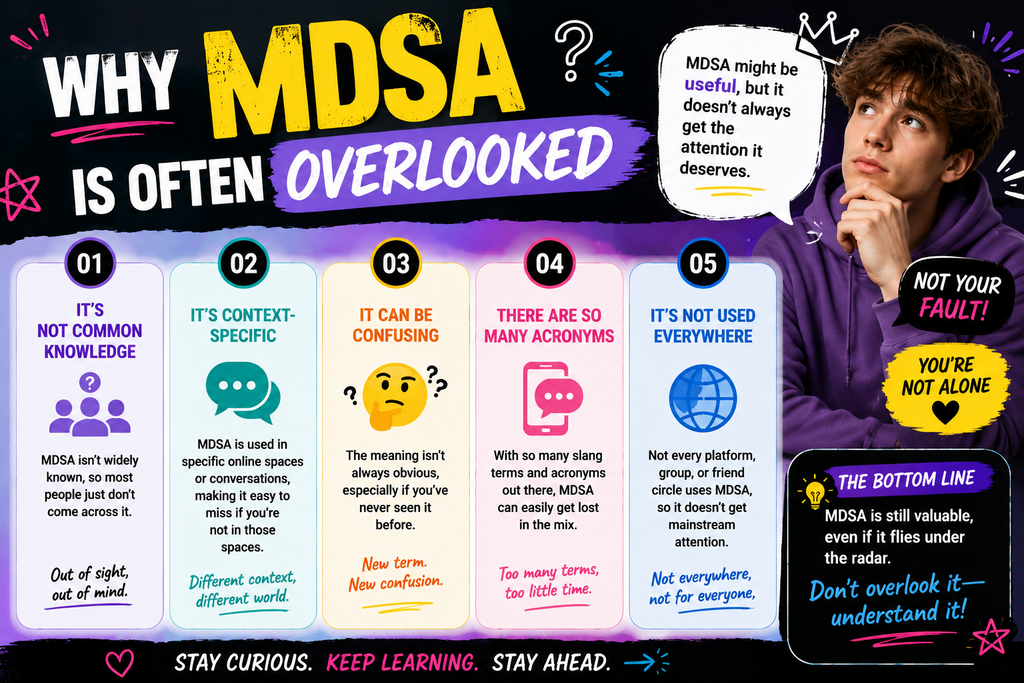
Why MDSA Is Often Overlooked
Social Stereotypes About Mothers
Mothers are widely seen as inherently nurturing. This stereotype makes it harder for teachers, doctors, relatives, and even survivors themselves to consider that a mother could be an abuser.
When people can’t imagine something, they often don’t look for it.
Difficulty Identifying Abuse
Abuse between a mother and daughter frequently overlaps with normal physical closeness — hugging, bathing, sharing a bed. This overlap makes it harder to draw a clear line, especially for children who have nothing to compare it to.
A child who has only ever known one version of “normal” often has no way of knowing it isn’t normal at all.
Lack of Public Awareness
Very little public health messaging addresses mother-perpetrated abuse specifically. Most awareness campaigns focus on stranger danger or father/male-perpetrator scenarios. This leaves a real gap in what survivors, parents, and professionals are trained to recognize.
YOU MAY ALSO WANT TO KNOW ABOUT 304 MEANS ONLINE
How MDSA Can Occur
Abuse Hidden Within Caregiving Roles
Because mothers are often primary caregivers, they have close, frequent, unsupervised access to their daughters. Abuse can be disguised as hygiene routines, medical checks, or bonding time.
This access — combined with social trust — can allow abuse to continue for years without outside suspicion.
Emotional Manipulation
Abuse is rarely just physical. Manipulation tactics can include:
- Making the daughter feel responsible for the mother’s emotional wellbeing
- Framing abusive behavior as love or closeness
- Threatening to withdraw affection or care if the daughter resists or tells
This manipulation is designed to keep the daughter silent and compliant, often without her fully understanding why.
Power Imbalances
A mother holds authority over a child by default — financially, emotionally, and physically. That imbalance makes it extremely difficult for a daughter to say no, push back, or seek help, especially when she depends on her mother for basic needs.
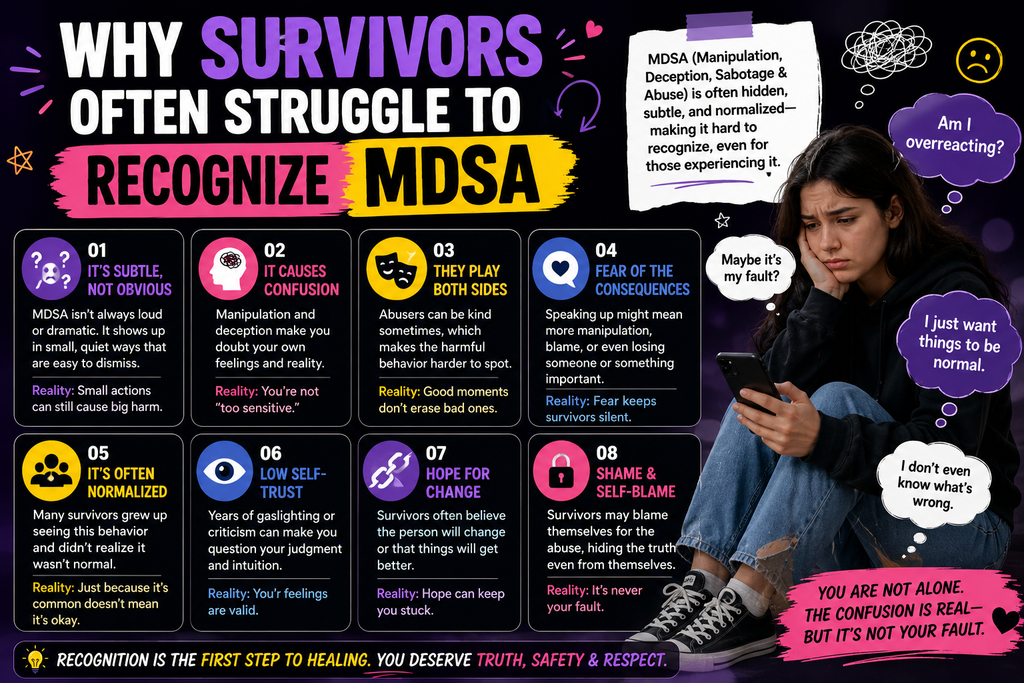
Why Survivors Often Struggle to Recognize MDSA
Confusion About Boundaries
Children learn what’s “normal” from their own household. If boundary violations start early, a daughter may not have the reference point to know something is wrong until much later — sometimes not until adulthood.
Normalization of Harmful Behavior
Repeated behavior, especially from a trusted parent, can start to feel routine. Survivors often describe knowing something felt “off,” without being able to name it as abuse for years.
Fear of Disrupting Family Relationships
Naming a mother as an abuser can feel like betraying the family, losing other relatives, or dismantling the only home a child has known. This fear keeps many survivors silent well into adulthood.
Psychological Effects of MDSA
Impact on Self-Esteem
Survivors often struggle with a damaged sense of self-worth. Some internalize blame, believing they caused or deserved what happened, even though responsibility always lies with the abuser.
Relationship Challenges
Abuse by a caregiver can affect how survivors form relationships later in life. This can look like difficulty trusting partners, discomfort with intimacy, or repeating unhealthy relationship patterns learned early on.
Mental Health Consequences
Research on childhood sexual abuse broadly links it to higher rates of:
- Depression and anxiety
- Post-traumatic stress symptoms
- Disordered eating
- Substance use as a coping mechanism
Not every survivor experiences all of these, and effects vary based on age at onset, duration, and available support.
Identity and Trust Issues
Because the abuse comes from a parent, survivors sometimes struggle with core questions about identity, safety, and who can be trusted — questions that go deeper than abuse by a non-caregiver might raise.
Barriers to Disclosure and Reporting
Fear of Not Being Believed
Because mother-perpetrated abuse defies expectations, survivors often fear disbelief more than usual. This fear is a major reason disclosure rates for this specific dynamic are lower than average.
Loyalty Conflicts
A daughter may still love her mother, need her financially, or fear what disclosure would do to siblings or the wider family. These conflicting feelings are normal and don’t mean the abuse wasn’t real.
Shame and Stigma
Shame often attaches to the survivor, not the abuser — even though the survivor did nothing wrong. Stigma around this specific dynamic can make survivors feel isolated from typical abuse-recovery spaces, which are often built around other abuse profiles.
Research and Awareness
Why Research Matters
Accurate research helps clinicians, teachers, and child protective workers recognize warning signs they might otherwise miss. Without it, mother-perpetrated abuse stays underreported and undertreated.
Evolving Understanding
Clinical understanding of female-perpetrated sexual abuse has grown over recent decades, though it still lags behind research on male-perpetrated abuse. Experts increasingly agree that underreporting, not lower prevalence, explains much of the gap in documented cases.
The Role of Survivor Advocacy
Survivor-led organizations and advocacy groups have played a major role in pushing this topic into clinical training and public conversation. Their work helps close the gap between lived experience and formal research.
SEE OUR GUIDE OF SYBAU FOR A STRONGER EXPRESSION
Finding Support and Professional Help
Speaking With a Trusted Professional
A trauma-informed therapist can help survivors process abuse at their own pace. Look for professionals who specifically list experience with childhood sexual abuse or complex family trauma.
Support Groups
Peer support groups — in person or online — connect survivors with others who understand this specific dynamic. Feeling less alone is often a turning point in recovery.
Crisis Resources
If you or someone you know needs support right now:
- RAINN National Sexual Assault Hotline: 1-800-656-4673 (free, confidential, 24/7)
- Childhelp National Child Abuse Hotline: 1-800-422-4453
- 988 Suicide & Crisis Lifeline: call or text 988 (for anyone in emotional distress, not just suicidal crisis)
When and How to Report
If a child is currently at risk, reporting isn’t optional — it’s necessary to keep them safe. In the U.S.:
- Call 911 if a child is in immediate danger.
- Contact Child Protective Services (CPS) in your state to report suspected ongoing abuse of a minor.
- Teachers, doctors, therapists, and childcare workers are mandatory reporters in most states — meaning they’re legally required to report suspected abuse.
- Adult survivors reporting past abuse can contact local police or RAINN’s hotline for guidance on options, including whether criminal charges are still possible depending on their state’s statute of limitations.
You don’t need proof to make a report. You need reasonable concern. Investigators are trained to assess the situation from there.
Conclusion
Now you understand the MDSA meaning and why it matters. MDSA refers to mother-daughter sexual abuse, a real and serious issue. It’s often missed because mothers aren’t expected to cause harm. Knowing the truth helps survivors feel less alone.
If something feels wrong in your life or a loved one’s, trust that feeling. Understanding the MDSA meaning is the first step toward getting help. Support is available through therapists, hotlines, and trusted professionals. No one has to face this in silence.
Key Takeaways
- Mother-daughter sexual abuse involves sexual contact, exposure, or exploitation by a mother or mother figure.
- It’s underreported because it defies common stereotypes about mothers as protectors.
- Survivors often don’t recognize it as abuse until years later.
- Effects can include damaged self-esteem, relationship difficulties, and mental health struggles.
- Reporting is possible and necessary when a child is currently at risk — mandatory reporters and CPS exist for this reason.
- Support is available through therapists, support groups, and crisis hotlines.
Frequently Asked Questions
What does MDSA mean?
MDSA most often stands for Mother-Daughter Sexual Abuse, a form of child sexual abuse where a mother is the perpetrator.
What is MDSA and EMSA?
These aren’t a linked pair — EMSA has separate, unrelated meanings (e.g., European Maritime Safety Agency), and any overlap with MDSA is coincidental, not a shared category.
Can I publish MDSA definitions on my website?
Yes, factual, respectful definitions are fine to publish, but avoid sensationalized “slang” framing — treat it as sensitive abuse-related content, not casual internet lingo, and consider linking to real support resources.
Is mother-daughter sexual abuse common?
It’s underreported, which makes true prevalence hard to measure. Experts believe reported cases significantly undercount actual occurrences due to stigma and disbelief.
Can a mother really be a sexual abuser?
Yes. Sexual abuse is about power and control, not gender. Abusers can be any gender, including mothers.
Why didn’t the survivor say something sooner?
Confusion about boundaries, fear of not being believed, loyalty to family, and shame all commonly delay disclosure — sometimes by decades.
What should I do if I suspect a child is being abused?
Contact Child Protective Services or call 911 if the child is in immediate danger. You don’t need certainty to report — reasonable concern is enough.
Is therapy necessary for survivors?
It’s not mandatory, but trauma-informed therapy significantly helps many survivors process abuse and rebuild trust and self-esteem.
Where can I find immediate support?
Call the RAINN hotline at 1-800-656-4673, available 24/7 and confidential.
This article is for informational purposes and is not a substitute for professional medical, psychological, or legal advice. If you are in immediate danger, call 911.