
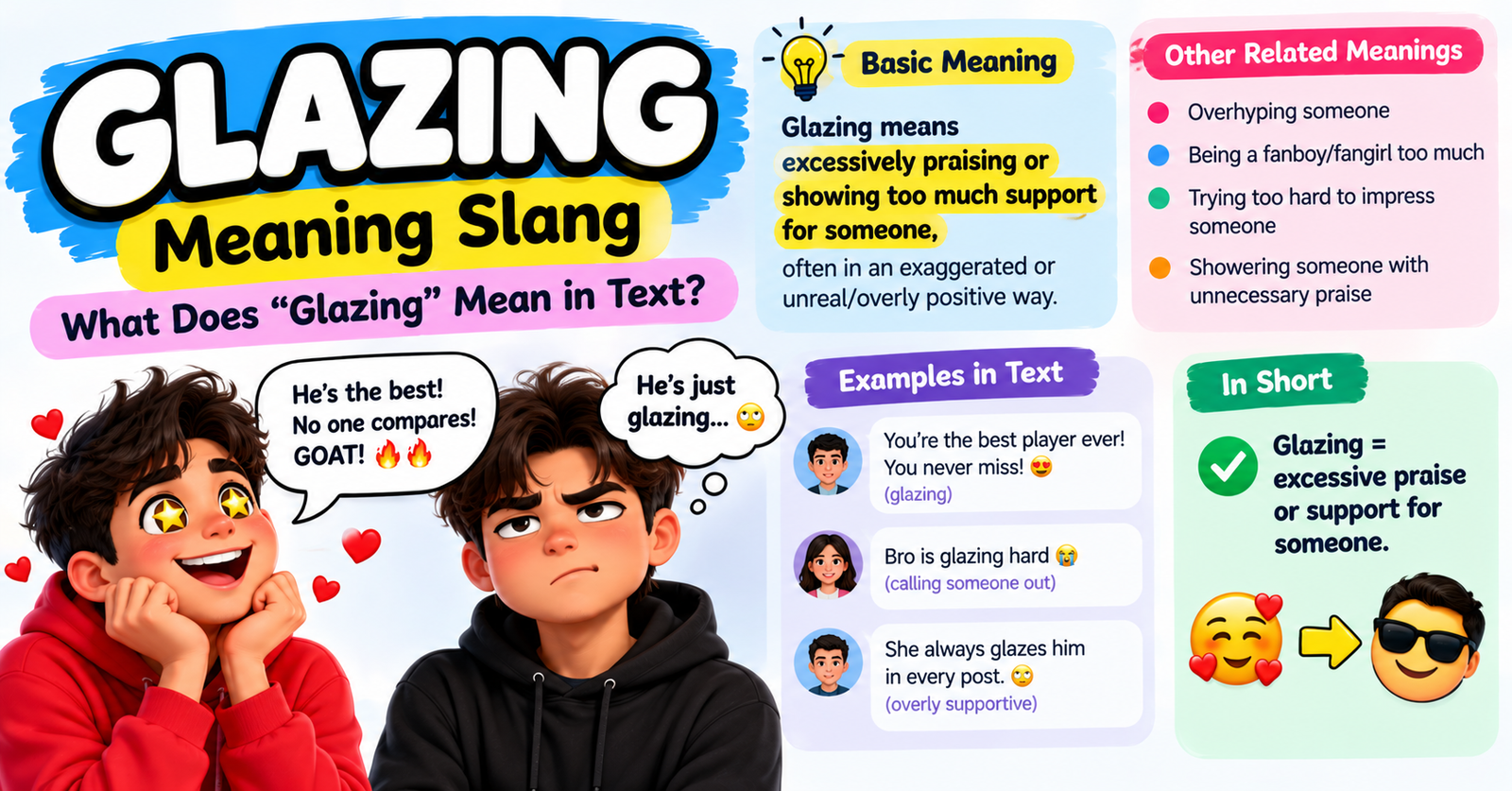
Seen “stop glazing” in a text or comment and not sure what it means? Glazing meaning slang is simple: it means praising someone way too much. The praise sounds fake, biased, or desperate, like a donut buried in sugar glaze.
The term started online, around Discord in late 2021. It then spread through Twitch and TikTok, helped by streamers like Kai Cenat. Here you’ll learn what it means in text, where it came from, and how to reply when someone says it to you.
What Does Glazing Mean Slang – Quick Meaning
Simple Definition:
Glazing is slang for over-the-top praise. The person doing it sounds like a fan, not a friend.
Merriam-Webster describes the slang sense as showering someone with excessive praise. The picture comes from a donut. A little glaze is nice. A thick coat is too much.
The person who does it is called a glazer.
Short Examples:
Here are five realistic ways people use it. Each one has a tone tag.
- Casual: “Bro, stop glazing. It was a good game, not the greatest ever.”
- Playful: “You’re glazing me today. What do you want?”
- Safe for work: “I think the team is glazing the new manager a bit.”
- Self-aware: “Not to glaze, but that was the best pizza I’ve ever had.”
- Crude (not safe for work): “He’s been dickriding that streamer all week.”
The last one means the same thing in a rougher way. Keep it out of work chats and family threads.
Related Slang Terms
These words overlap with glazing. They are not always identical.
- Glazer: a person who glazes. “Every glazer in the comments showed up.”
- Riding / dickriding: a cruder cousin of glazing. Offensive in most settings.
- Sucking up / kissing up: praising someone to win a favor. “She’s kissing up to the boss.”
- Simping: acting overly devoted, often for romantic reasons. “He’s simping hard.”
- Stanning: loud, loyal fandom. Often friendly, not always an insult.
- Bootlicking: extreme obedience to someone with power.
- Yes-man: someone who agrees with everything.
Origin & Background of “Glazing” in Slang
The word comes from “glaze,” a shiny coating. Think donuts, pottery, or a ham.
Online communities flipped it into a slang term. Know Your Meme traces early use to Discord in late 2021. It then spread on Twitch in 2022. Streamers like Kai Cenat, Duke Dennis, and xQc helped carry it into chat culture. One widely shared clip shows Kai explaining the word to xQc on stream.
So if you searched glazing meaning slang etymology, here is the honest version. The exact first use is hard to prove. Slang starts in small groups before anyone writes it down.
Kai Cenat connects to the term in another way. TODAY reported that he told photographers to “glaze” him at the Grammys. That was a joke, and it shows how playful the word can be.
By the mid-2020s, mainstream outlets were explaining it to parents. That is usually a sign a word has gone mainstream. It also hints that the word may fade soon. Slang ages fast.
ANOTHER COMMON TEXTING ABBREVIATION IS MFW
Real-Life Conversations
These examples are written to show how the word really sounds.
1. WhatsApp Group Chat
Ali: Messi is better than every player in history. Period.
Zane: Bro, you’re glazing.
Ali: Facts aren’t glazing.
Zane: Ok, glazer 😂
This is friendly teasing. Nobody is angry.
2. Instagram DM
Maya: Your new haircut is unreal. You look like a movie star.
Jess: Stop glazing me lol
Maya: I’m serious!
Jess: Ok thank you 😭
Here, “glazing” works like a shy thank-you. It means “that’s a lot of praise.”
3. TikTok Comments
User 1: This creator is the best in the world. Nobody comes close.
User 2: The glazing in this comment section is insane.
User 3: Not glazing but this video actually slaps.
Comment sections are where glazing meaning slang shows up most. Fans praise, others tease them for it.
Emotional & Psychological Meaning Behind “Glazing”
People glaze for different reasons. These are general patterns, not clinical facts.
- Admiration. They truly love someone’s work and cannot hold back.
- Approval-seeking. They hope the praised person will notice them.
- Group loyalty. Defending a favorite player, rapper, or streamer feels like defending a team.
- Strategy. At work, flattery can be a way to get ahead.
People call it out for a reason too. Glazing feels unfair or fake. It can also make the praiser look like they lack their own opinion.
There is also self glazing. That means hyping yourself up. It can be a joke, like “I’m glazing myself, but my cooking is elite.” It can also read as bragging when it is not playful.
The definition of glazing someone is simple. You praise them more than the situation deserves, often to please them or protect them from criticism.
YOU MAY ALSO WANT TO KNOW ABOUT WYLL MEANS ONLINE
Usage in Different Contexts
1. Social Media
This is the home of the word. You will see it on TikTok, Twitch, YouTube, X, and Reddit threads. People use it to tease fans and call out hype. It often shows up in all caps or as a spam word in live chat.
2. Friends & Relationships
With friends, it is mostly a joke. With a partner, it can be sweet or annoying. “You’re glazing me” can mean “you’re being too nice.” “Stop glazing your ex” is a different story.
3. Work or Professional Settings
Avoid it. Many coworkers will not know the term. Some may find it rude. Use plain words instead, like “that feels like too much praise.”
4. Casual vs Serious Tone
The tone depends on the speaker.
- Casual: laughing, emojis, friends. Light teasing.
- Serious: no emojis, short reply. It can sound like an accusation of faking it.
When unsure, add a smiley or a joke. It lowers the temperature.
Common Misunderstandings
1. It’s Not Always Inappropriate
Some people search glazing meaning slang dirty because the word sounds suggestive. In most chats, glazing only means too much praise. Sources describe it as a milder cousin of Dickriding. A crude sexual meaning exists in some online corners. Context makes it clear. If the topic is not sexual, it almost never is. Still, skip it around kids, family, and coworkers.
2. It’s Not the Same as Genuine Compliments
A real compliment is specific and earned. Glazing is exaggerated or one-sided. “Great presentation” is a compliment. “You’re the greatest speaker alive” is glazing.
3. It’s Not Always Negative
Between friends it can be affectionate. “Okay, I’ll glaze you. That was clean.” Many people use it with a wink.
4. Not Everyone Knows the Term
Older adults may think you mean donuts or window glass. If you use it with someone outside Gen Z or Gen Alpha circles, explain it once. Otherwise it can land wrong.
Comparison Table
This table shows how glazing differs from similar words.
| Term | Meaning | Tone | Safe at work? |
| Glazing | Excessive praise | Teasing to critical | Usually no |
| Compliment | Honest praise | Positive | Yes |
| Flattery | Praise to gain a favor | Slightly negative | Use carefully |
| Simping | Over-devotion, often romantic | Mocking | No |
| Stanning | Loud fandom | Playful | Depends |
| Dickriding | Crude word for glazing | Offensive | No |
SEE OUR GUIDE OF AURA FOR A STRONGER EXPRESSION
Variations & Types of Glazing
The word shows up in a few forms. Each has a slightly different feel.
- Glazing: the act. “He’s glazing again.”
- Glazer: the person. “Look at the glazers in the replies.”
- Self-glazing: praising yourself, serious or joking.
- Chat glazing: many people hyping someone at once, often in live streams.
- Sports glazing: over-praising a star athlete. Fans of rival players use it a lot.
- Ironic glazing: fake, exaggerated praise as a joke. “Best sandwich in human history, I’m crying.”
How to Respond When Someone Says “Stop Glazing”
Pick a reply that fits the moment. You do not need to defend yourself.
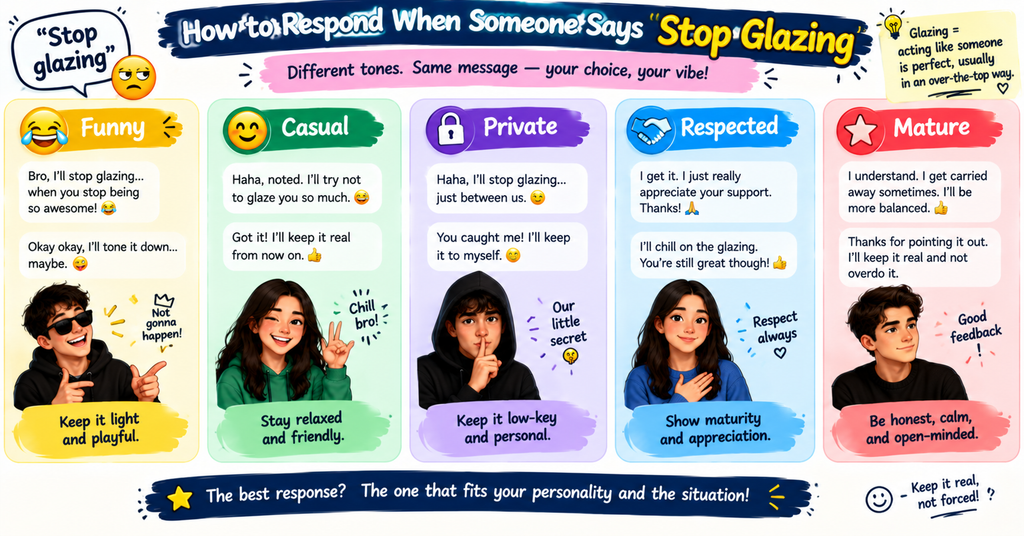
Casual Replies
- “Fair, I got carried away.”
- “Ok, ok. I’ll tone it down.”
- “I just really liked it.”
Funny Replies
- “I’m not glazing, I’m basting.”
- “Let me finish the donut first.”
- “Glazing is my cardio.”
Mature / Confident Replies
- “I meant what I said. I’m not exaggerating.”
- “I can disagree with you without being mean about it.”
- “Respect your view, but I stand by mine.”
Private / Respectful Replies
Use these when the chat is one-on-one or the person seems upset.
- “I didn’t mean to come on strong. Thanks for telling me.”
- “I’ll keep that in mind next time.”
- “Want to talk about it in a call instead?”
Regional & Cultural Usage
No reliable data tracks this word by country. The notes below are general patterns.
Western Culture
In the US and other English-speaking countries, the term is strongest. It spread through gaming, streaming, and short video apps. Teens and young adults use it most. Parents often learn it from news explainers.
SEE OUR GUIDE OF CHOPPED FOR A STRONGER EXPRESSION
Asian Culture
Many people in Asia pick up the English word through YouTube, TikTok, and Twitch. Local languages already have strong words for flattery. In Mandarin, people say “pāi mǎpì.” In Japanese, “gomasuri.” In South Asia, “chamchagiri” describes sucking up to the powerful.
Middle Eastern Culture
Flattery has its own rich vocabulary in Arabic dialects. One example is “masah el-jokh” in some regions. English glazing is mostly known among young, online users who follow Western creators.
Global Internet Usage
Online, the word travels easily. Meme clips and live stream chats carry it across borders. Meaning stays about the same. Tone and offensiveness can shift by culture.
Conclusion
Glazing means over-the-top praise, often with a teasing edge. It started on Discord and Twitch, then spread through TikTok and group chats. Now you can spot it, use it, and answer it with confidence.
Use it with friends and skip it at work. If someone says “stop glazing,” reply with a joke or an honest answer. Slang changes fast, so if a word is unclear, just ask.
FAQs
What does glaze mean in Gen Z?
It means to hype someone up way too much, like a fan gushing over a creator or athlete. The praise sounds exaggerated, biased, or fake.
Why are kids calling each other out for glazing?
They see over-the-top praise as sucking up or having no opinion of your own. Mostly it’s friendly teasing, like “bro, stop glazing.”
What is meant by glazing?
Glazing is giving someone excessive, often unearned praise, usually to please them or defend them. The name comes from the image of a donut buried under too much glaze.
Is glazing a bad word?
Not on its own. It is slang, and it is rated milder than the crude version, dickriding. Still, it can feel rude if said in a serious tone.
Is glazing positive or negative?
Usually negative or teasing. It suggests the praise is too much. Among friends it can be affectionate.
What is a glazer?
A glazer is someone who praises another person too much, especially a celebrity, athlete, or boss.
What does self glazing mean?
It means hyping or praising yourself. It can be a joke or a flex.
Where did glazing come from?
Online sources trace it to Discord around late 2021, then Twitch in 2022. Streamers like Kai Cenat helped popularize it.
2 thoughts on “Glazing Meaning Slang: What Does “Glazing” Mean in Text?”