
If you saw “DOE” on a chart or lab note and got worried, you’re not alone. This guide explains exactly what it means, why doctors write it, and when it matters.
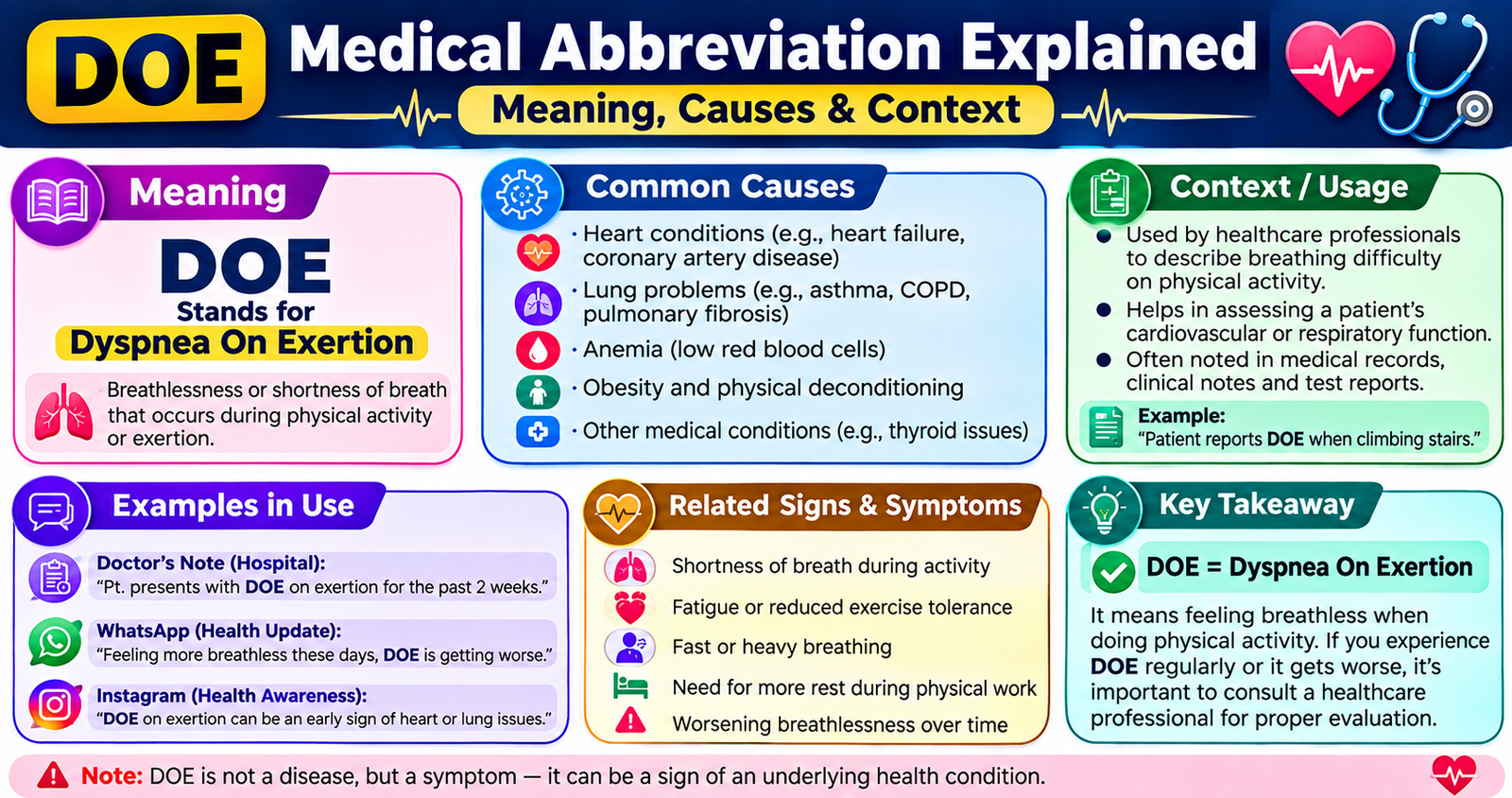
Quick answer: In medicine, The DOE medical abbreviation stands for Dyspnea On Exertion. It means a person feels short of breath during physical activity, even activity that used to feel easy.
DOE isn’t a disease. It’s a symptom. Doctors use it to describe how breathing changes with movement, and it helps them figure out what’s really going on. This guide breaks down the DOE medical abbreviation in plain language. You’ll learn what causes it, how doctors evaluate it, and when it signals something serious. Whether you’re a patient, caregiver, or just curious, you’ll walk away with clear, practical answers.
Other Meanings of “DOE” You Might See
Before we go deeper into the medical meaning, here’s a quick note. DOE isn’t only a medical term.
- DOE (job listings): “Salary: DOE” means “Depends On Experience.” It has nothing to do with health.
- DOE (date): In some forms, DOE means “Date Of Entry” or is confused with DOB (Date of Birth).
- DOE (government): In the U.S., DOE also refers to the Department of Energy or, in some states, the Department of Education.
If you found “DOE” on a job posting or government form, that’s a different meaning entirely. This article focuses on the medical use of DOE.
What Does DOE Mean in Medical Terms?
DOE stands for Dyspnea On Exertion. “Dyspnea” is the medical word for shortness of breath. “On exertion” means it happens during physical effort, like walking, climbing stairs, or carrying groceries.
So DOE simply describes breathlessness that shows up with activity.
Examples in real notes:
- “Patient reports DOE after walking two blocks.”
- “DOE noted while climbing one flight of stairs.”
- “Mild DOE with moderate exercise, resolves with rest.”
- “New onset DOE over the past two weeks.”
Why Is DOE Important?
DOE matters because it’s often one of the first signs that the heart or lungs aren’t working as well as they should. It’s a clue, not a diagnosis.
Doctors track DOE closely because:
- It can point to early heart or lung disease.
- It helps measure how a condition is progressing.
- It’s an easy symptom for patients to describe and doctors to monitor over time.
What Is Dyspnea?
Dyspnea is the general medical term for the feeling of not getting enough air. It can feel like:
- Tightness in the chest
- Needing to breathe faster
- A sense of “air hunger”
- Heavy or labored breathing
Dyspnea can happen at rest or with activity. When it happens specifically during activity, doctors label it DOE.
What Does “On Exertion” Mean?
“On exertion” just means “during physical effort.” That effort can be small or large, depending on the person.
For some people, exertion means running or climbing hills. For others, especially those with heart or lung conditions, exertion might mean walking across a room or getting dressed.
Common Symptoms of DOE
DOE doesn’t usually show up alone. People often notice it alongside other symptoms, such as:
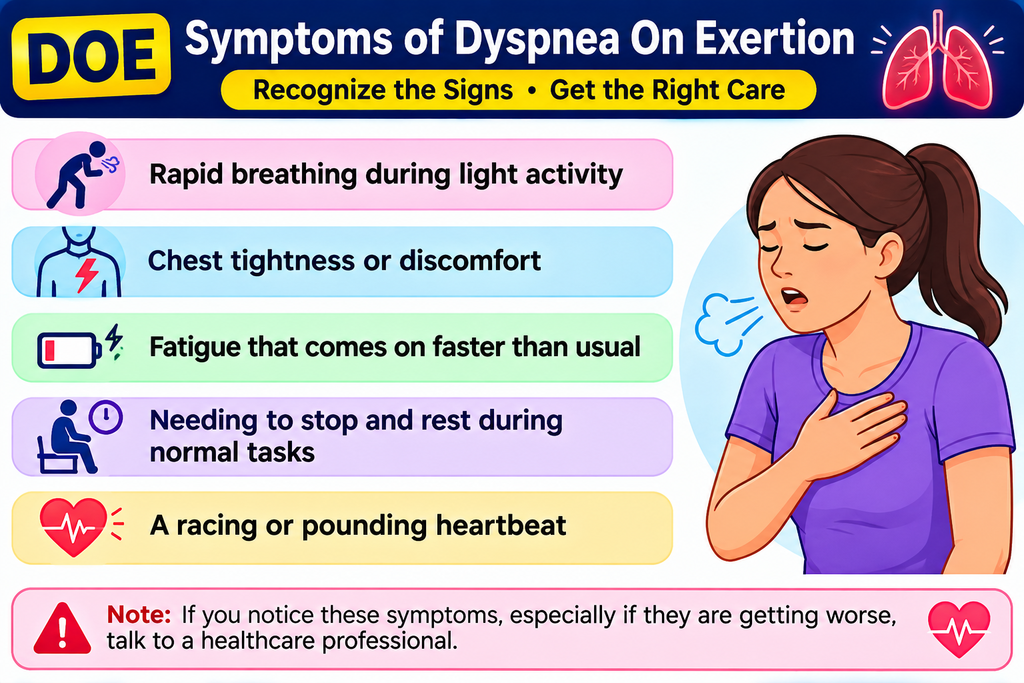
- Rapid breathing during light activity
- Chest tightness or discomfort
- Fatigue that comes on faster than usual
- Needing to stop and rest during normal tasks
- A racing or pounding heartbeat
What Causes DOE?
DOE has many possible causes. Some are serious. Others are simple and fixable, like being out of shape. Here’s a breakdown.
YOU MAY ALSO WANT TO KNOW ABOUT WNL MEANS ONLINE
Heart-Related Causes
The heart pumps blood and oxygen to the body. When it can’t keep up, breathlessness follows. Common heart-related causes include:
- Heart failure
- Coronary artery disease
- Irregular heart rhythms (arrhythmias)
- Valve problems
Lung-Related Causes
The lungs bring oxygen in and remove carbon dioxide. Lung problems make this harder, especially during activity.
- Asthma
- Chronic Obstructive Pulmonary Disease (COPD)
- Pulmonary hypertension
- Interstitial lung disease
Blood Disorders
- Anemia (low red blood cell count) reduces how much oxygen your blood can carry. This makes even light activity feel harder.
Lifestyle Factors
- Being out of shape (deconditioning)
- Excess body weight
- Smoking
- High stress or anxiety, which can mimic breathlessness
Other Medical Conditions
- Thyroid disorders
- Obesity-related breathing changes
- Panic disorder (can cause breathlessness that feels similar to DOE, though the cause is different)
Risk Factors
Some people are more likely to develop DOE than others. Risk factors include:
- Age over 60
- History of smoking
- Existing heart or lung disease
- Sedentary lifestyle
- Obesity
- Family history of heart disease
How Doctors Evaluate DOE
When a patient reports DOE, doctors don’t guess. They investigate step by step to find the real cause.
Physical Examination
A doctor will typically:
- Listen to the heart and lungs
- Check oxygen levels with a pulse oximeter
- Look for swelling in the legs or ankles
- Ask how far the patient can walk before feeling breathless
Common Diagnostic Tests
| Test | What It Checks |
| Chest X-ray | Lung and heart size, fluid buildup |
| Echocardiogram | Heart pumping function |
| Pulmonary function test | Lung capacity and airflow |
| Blood tests (CBC) | Anemia, infection |
| EKG | Heart rhythm problems |
| Stress test | Heart performance under activity |
DOE vs. SOB: What’s the Difference?
SOB stands for Shortness Of Breath. It’s a broader term. SOB can happen at rest or with activity, for many reasons.
DOE is a specific type of SOB — one that only happens during exertion. In short: all DOE is SOB, but not all SOB is DOE.
DOE vs. Orthopnea
Orthopnea means shortness of breath while lying flat, which improves when sitting up. It often points to heart failure or fluid buildup in the lungs.
DOE happens with activity. Orthopnea happens with body position. Doctors often ask about both together, since they can appear in the same condition.
Closely related is PND, or Paroxysmal Nocturnal Dyspnea. PND is sudden, severe shortness of breath that wakes someone up at night, usually 1–2 hours after falling asleep. Like orthopnea, PND is commonly linked to heart failure.
Note: “PND” is also used outside cardiology — in obstetrics, some people use it informally for postpartum-related concerns, but that is not its standard medical meaning. In pregnancy and general medicine, PND almost always refers to paroxysmal nocturnal dyspnea unless the context clearly states otherwise.
DOE vs. Exercise Fatigue
It’s easy to confuse normal tiredness with a medical symptom. Here’s how they differ.
Normal Exercise Fatigue
- Improves quickly with rest
- Matches the intensity of the activity
- Doesn’t get worse over weeks
- No chest discomfort or dizziness
Dyspnea on Exertion
- Happens with activities that used to be easy
- Gets worse over time
- May come with chest tightness, dizziness, or swelling
- Doesn’t fully resolve with normal rest
If breathlessness is new, worsening, or happening with less effort than before, it’s worth mentioning to a doctor.
Common Medical Conditions Associated with DOE
Heart Failure
The heart can’t pump blood efficiently. Fluid can back up into the lungs, making breathing harder during activity.
Coronary Artery Disease
Narrowed arteries reduce blood flow to the heart muscle, which can trigger breathlessness during effort.
Asthma
Airways narrow and swell, making airflow harder, especially during exercise or cold weather.
Chronic Obstructive Pulmonary Disease (COPD)
Long-term lung damage, often from smoking, reduces airflow and oxygen exchange.
Pulmonary Hypertension
High blood pressure in the lung’s arteries makes the heart work harder to pump blood through the lungs.
Anemia
Fewer red blood cells mean less oxygen delivered to muscles, causing breathlessness sooner than normal.
Obesity
Extra weight increases the effort needed to breathe and move, and can affect lung expansion.
How Is DOE Diagnosed?
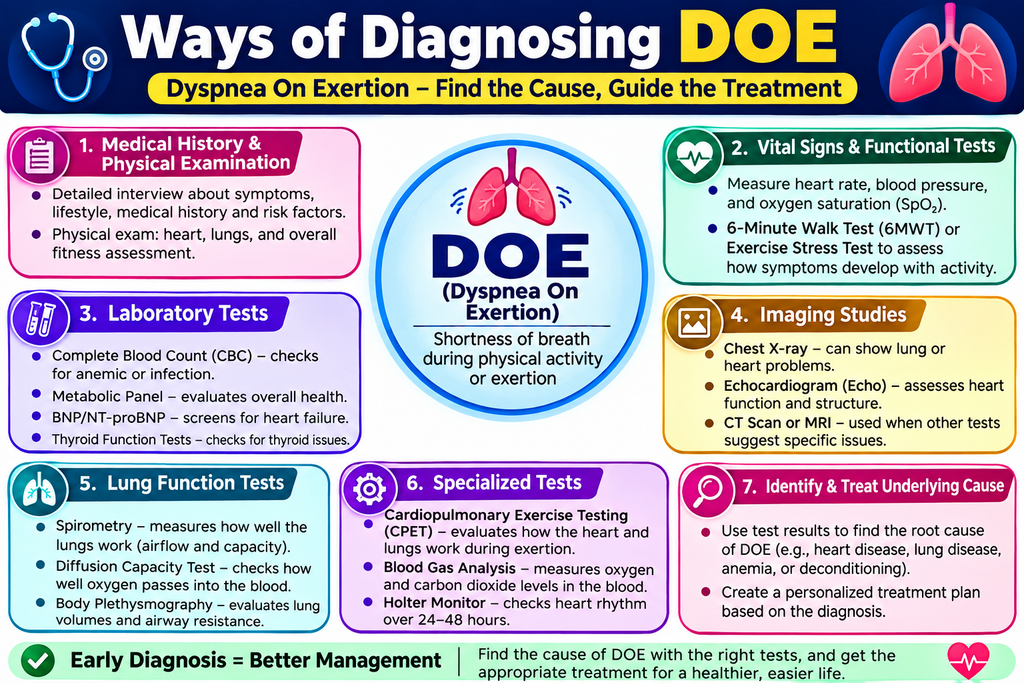
Medical History
Doctors ask when symptoms started, how they’ve changed, and what makes them better or worse.
Physical Examination
A hands-on check of heart sounds, lung sounds, and oxygen levels.
Laboratory Tests
Blood work checks for anemia, thyroid issues, and signs of heart strain.
Imaging Studies
X-rays or CT scans look for fluid, lung damage, or heart enlargement.
Pulmonary Function Tests
These measure how well the lungs move air in and out.
Cardiac Testing
Echocardiograms and stress tests assess how well the heart handles activity.
ANOTHER COMMON TEXTING ABBREVIATION IS TLC
Treatment for DOE
Treatment depends entirely on the cause. There’s no single fix for DOE, because DOE itself is a symptom, not the underlying problem.
Heart-Related Treatment
- Medications to strengthen heart function or control rhythm
- Diuretics to reduce fluid buildup
- In some cases, procedures or surgery
Lung-Related Treatment
- Inhalers or bronchodilators
- Pulmonary rehabilitation programs
- Oxygen therapy in more advanced cases
Treating Anemia
- Iron supplements
- Treating the underlying cause of blood loss or deficiency
Lifestyle Improvements
- Gradual, doctor-approved exercise
- Weight management
- Quitting smoking
- Managing stress
Can DOE Be Prevented?
Not always, but risk can be lowered. Helpful steps include:
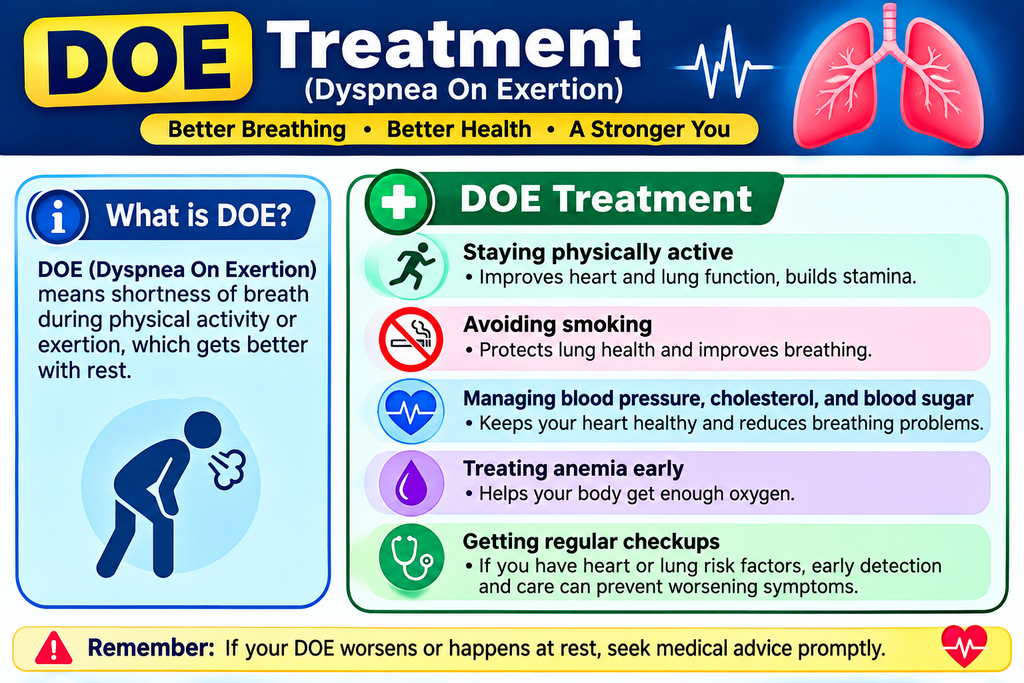
- Staying physically active
- Avoiding smoking
- Managing blood pressure, cholesterol, and blood sugar
- Treating anemia early
- Getting regular checkups if you have heart or lung risk factors
When Is DOE a Medical Emergency?
Most cases of DOE build up gradually and are not emergencies. But some symptoms need immediate medical attention. Seek emergency care if DOE comes with:
- Chest pain or pressure
- Fainting or near-fainting
- Blue lips or fingertips
- Severe, sudden breathlessness at rest
- Confusion or extreme weakness
If you or someone near you has these symptoms, call emergency services right away rather than waiting it out.
Prognosis
Prognosis depends completely on the cause. DOE from mild deconditioning often improves with regular exercise. DOE from heart failure or COPD is usually managed long-term rather than cured, though treatment can significantly improve quality of life.
Early diagnosis generally leads to better outcomes, which is why doctors take new or worsening DOE seriously.
How Doctors Use DOE in Medical Records
Doctors often grade DOE by how much activity triggers it. This helps track whether a condition is improving or getting worse.
Example 1
“DOE with two flights of stairs, stable compared to last visit.”
Example 2
“Increasing DOE, now occurring with minimal exertion such as dressing.”
Example 3
“No DOE reported at this time; exercise tolerance normal.”
Example 4
“DOE improved after starting inhaled bronchodilator therapy.”
Real Patient Scenarios
Scenario 1: Heart Failure
A 68-year-old notices breathlessness while gardening, something that never used to bother them. An echocardiogram shows reduced heart pumping function. Diuretics and heart medication improve symptoms within weeks.
Scenario 2: Iron-Deficiency Anemia
A 32-year-old feels winded climbing one flight of stairs. Blood tests show low iron levels. Iron supplements resolve the breathlessness over two months.
Scenario 3: Asthma
A 24-year-old gets breathless only during outdoor runs in cold weather. An inhaler used before exercise controls the symptom.
Scenario 4: Poor Physical Conditioning
A 40-year-old who hasn’t exercised in years feels breathless after a short jog. A gradual walking program builds tolerance over several weeks, with no underlying disease found.
Common Misconceptions About DOE
Myth 1: DOE Is a Disease
False. DOE is a symptom that points to an underlying cause, not a diagnosis on its own.
Myth 2: DOE Only Happens to Older Adults
False. Younger people can experience DOE too, often from asthma, anemia, or poor conditioning.
Myth 3: DOE Always Means Heart Disease
False. Lungs, blood, weight, and fitness level can all cause DOE. Heart disease is one possibility among several.
Myth 4: Shortness of Breath During Exercise Is Always Normal
Not necessarily. Some breathlessness during hard exercise is normal. Breathlessness during light, everyday activity is not, and deserves attention.
Experience-Based Insight
Clinicians commonly note that patients often downplay early DOE, assuming it’s just “getting older” or “being out of shape.” In many cases, that assumption is correct.
But because DOE can also be an early warning sign of heart or lung disease, healthcare providers generally recommend mentioning any new or worsening breathlessness at your next appointment, rather than waiting for it to become severe.
Key Takeaways
- DOE means Dyspnea On Exertion — breathlessness during physical activity.
- It’s a symptom, not a diagnosis.
- Causes range from mild (deconditioning) to serious (heart failure, COPD).
- New or worsening DOE should be checked by a doctor.
- DOE with chest pain, fainting, or blue lips needs emergency care.
Common Mistakes to Avoid
- Ignoring gradual changes in exercise tolerance
- Assuming breathlessness is “just aging” without getting checked
- Confusing DOE with anxiety-related breathlessness without evaluation
- Delaying care when DOE comes with chest pain or dizziness
When to Seek Medical Advice
Talk to a doctor if you notice:
- Breathlessness during activities that used to feel easy
- DOE that’s getting worse over days or weeks
- DOE paired with swelling, chest discomfort, or fatigue
- Any sudden or severe breathing difficulty
Conclusion
The DOE medical abbreviation stands for Dyspnea On Exertion — shortness of breath during physical activity. It’s a symptom, not a disease. It can be mild and harmless, or an early sign of something bigger, like heart or lung trouble.
If your breathing changes and you’re not sure why, don’t ignore it. Talk to a doctor, especially if DOE is new, worsening, or paired with chest pain or dizziness. Catching the cause early often makes treatment easier and outcomes better.
Frequently Asked Questions
What does DOE mean in medical terms?
DOE means Dyspnea On Exertion — shortness of breath that happens during physical activity.
What is DOE medical abbreviation in cardiology?
In cardiology, DOE is a key symptom used to assess heart function, often tracked alongside orthopnea and PND to monitor conditions like heart failure.
Is there a DOE ICD-10 code?
DOE itself doesn’t have its own ICD-10 code — doctors code the underlying cause (like heart failure or COPD), with dyspnea symptoms (R06.0) noted separately if needed.
What does DOE mean on a job application?
On job listings, “DOE” usually means “Depends On Experience,” referring to salary. This has no connection to the medical meaning.
Is DOE the same as being out of breath after exercise?
Not exactly. Feeling winded after intense exercise is normal. DOE refers to breathlessness during activities that shouldn’t normally cause it, especially when it’s new or worsening.
Can anxiety cause DOE?
Anxiety can cause breathlessness that feels similar to DOE. However, true DOE is tied to physical exertion and often has a physical cause. A doctor can help tell the difference.
Is DOE dangerous?
DOE itself isn’t dangerous, but its cause might be. Mild, stable DOE from low fitness is different from new or worsening DOE, which should be medically evaluated.
How is DOE treated?
Treatment targets the underlying cause — heart medication for heart conditions, inhalers for lung conditions, iron for anemia, or gradual exercise for deconditioning.
This article is for general educational purposes and is not a substitute for professional medical advice. If you’re experiencing new or worsening shortness of breath, please consult a qualified healthcare provider.
1 thought on “DOE Medical Abbreviation Explained: Meaning, Causes & Context”