
“my study group talks about everything except studying 😂💙” The blue heart shows up in all kinds of captions, not just romantic ones.
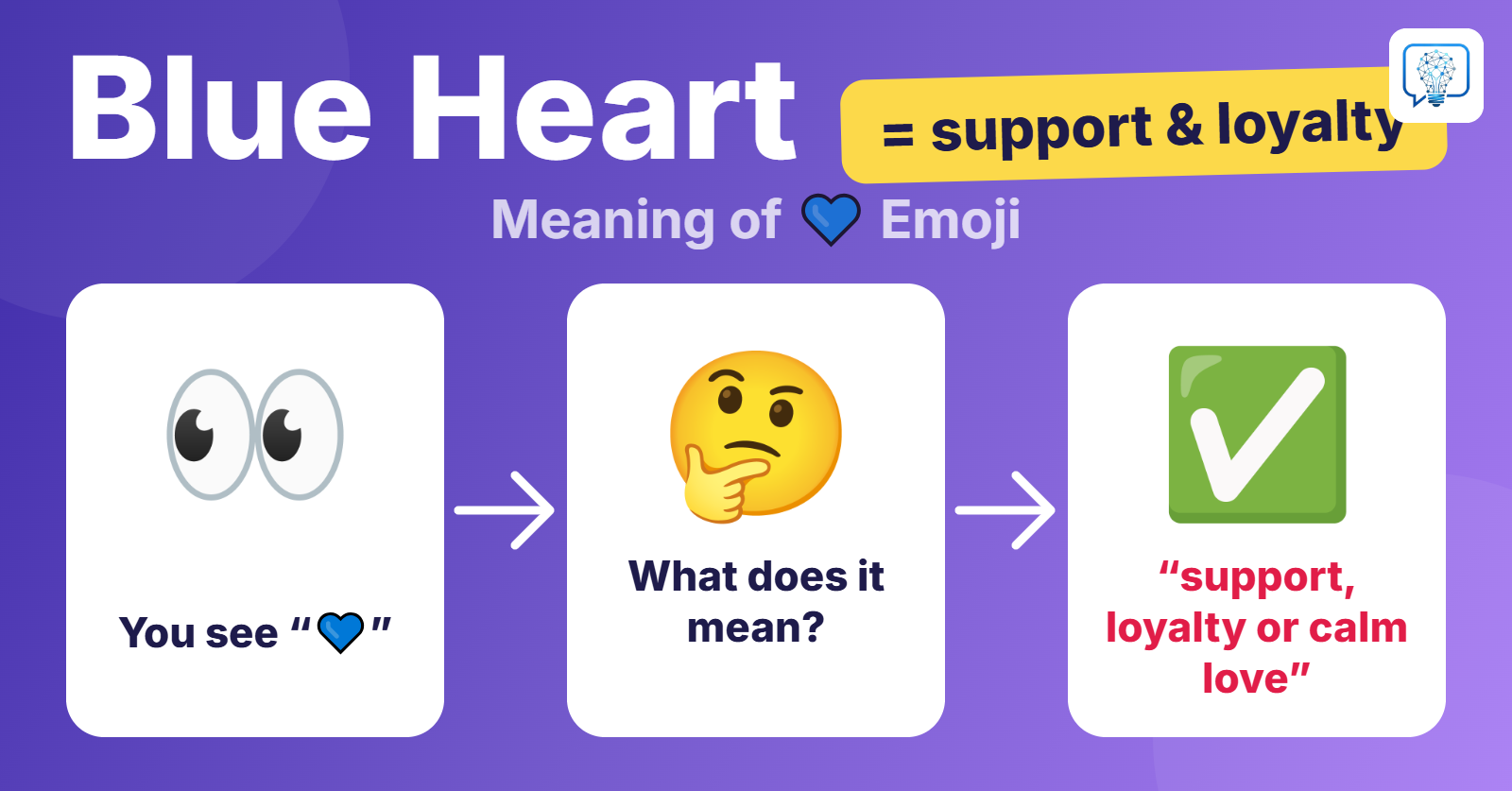
Quick answer: The blue heart emoji 💙 is a classic heart shape colored blue, used to show love, support, admiration, happiness and excitement, often toward something connected to the color blue. Dictionary.com gives the Smurfs, Duke University and autism awareness as examples of “blue” things people pair it with.
Where the blue heart emoji came from
The blue heart was approved under Unicode 6.0 in 2010, the same year as several other heart colors. Its shade varies a little by platform: X’s (formerly Twitter) blue heart is lighter than Apple’s, and Microsoft’s version has a black outline.
How the blue heart emoji is used
| Use | Example |
|---|---|
| Calm, steady affection | “love you, stay safe out there 💙” |
| Supporting a cause | Used for autism awareness and other blue-ribbon causes |
| Team or brand loyalty | “go Dodgers 💙” |
| Friendship | “besties forever 💙” |
Blue heart vs red heart
A red heart ❤️ is the go-to for strong romantic love. Blue feels calmer and more loyal, more like trust and steady support than a rush of passion, which is why it works so well for friendships, teams, and causes, not just couples.
Real chat examples
- A: “made it home safe!”
- B: “good 💙 text me tomorrow”
- A: “thank you for helping me move”
- B: “anytime 💙”
Is the blue heart romantic?
It can be, especially from a partner, but it’s used just as often between friends, family and fans of a team or cause. Context decides more than the color alone.
Similar emoji
- White heart 🤍 is calmer and more minimalist.
- Yellow heart 💛 leans toward friendship and joy.
- Black heart 🖤 can mean a dark mood or a serious cause.