
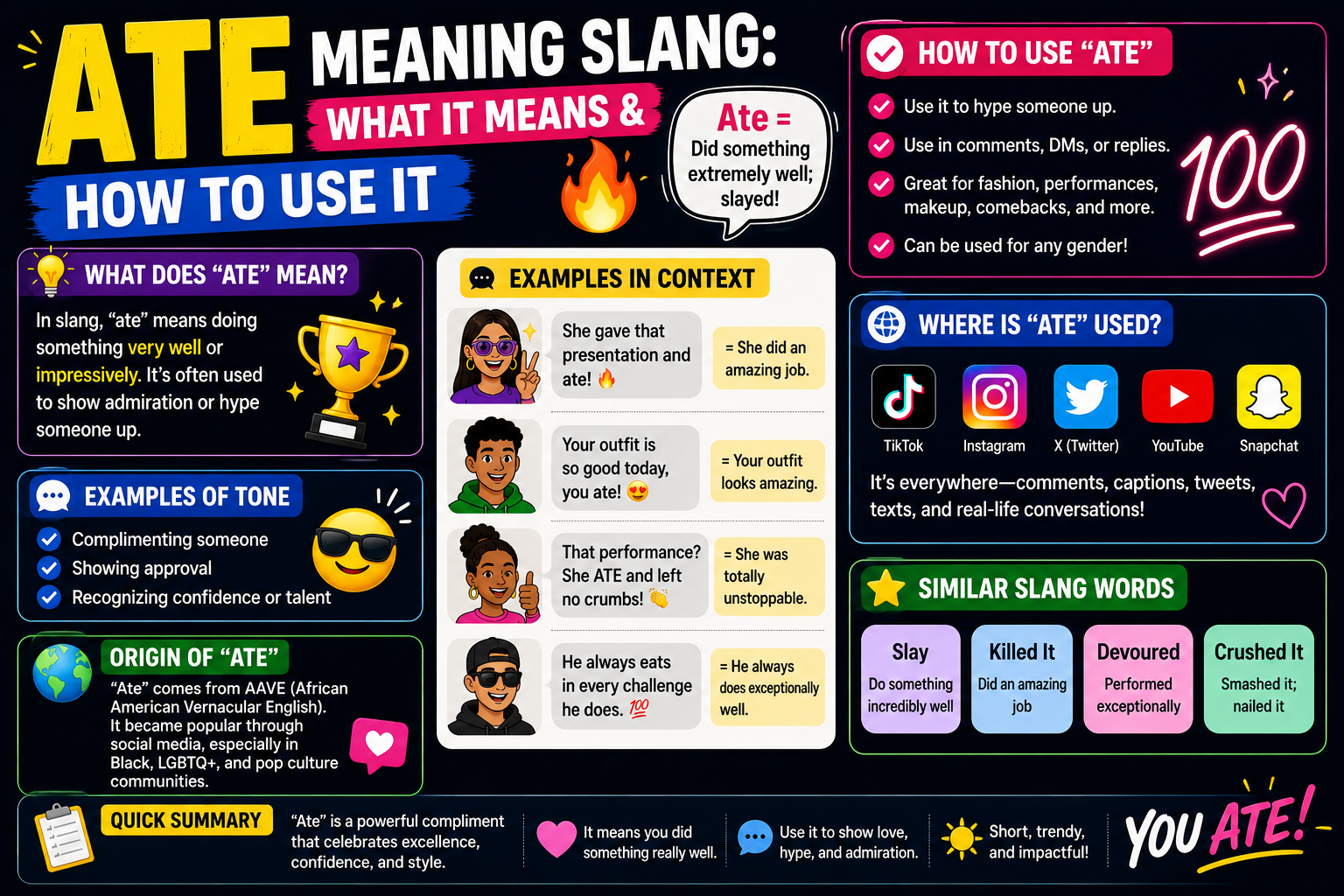
Have you seen someone say “she ate” and wondered what it means? It’s a popular slang term online. People use it to give a quick, strong compliment. Once you know it, you’ll notice it everywhere.
“Ate” means someone did something really well. It could be an outfit, a performance, or just a great moment. This guide explains exactly how and when to use it.
Ate Meaning in Text
In texting, “ate” (often written as “ate that” or “she ate”) is used as a short compliment. It means someone did something impressively well. It has nothing to do with actual food — it’s purely about praising performance, style, or confidence.
Example:
“Did you see her outfit today?” “She ATE.”
Ate Slang Meaning
The slang use of “ate” comes from ballroom and drag culture, where “eating” meant delivering a flawless, show-stopping performance. Over time, it spread into mainstream internet slang, especially through social media, and now it’s used broadly to praise anything done exceptionally well — a look, a song, a comment, a dance move, or even a comeback in an argument.
Some people add “and left no crumbs” after “ate” for extra emphasis, meaning the performance was so complete there was nothing left to criticize.
What Does Ate Mean in Chat?
In chat conversations, “ate” is almost always positive. It’s a quick, enthusiastic way to hype someone up. You’ll see it used alone, paired with emojis, or combined with other slang like “she ate and left no crumbs” or “you really ate that.”
Example:
“I finally posted my project.” “You ATE 🔥🔥”
Ate Meaning on Snapchat
On Snapchat, “ate” usually shows up in captions or chat replies reacting to a friend’s photo, video, or story. Because Snapchat is casual and visual, “ate” works well as a quick reaction to how someone looks or what they posted.
Ate Meaning on Instagram, TikTok, and WhatsApp
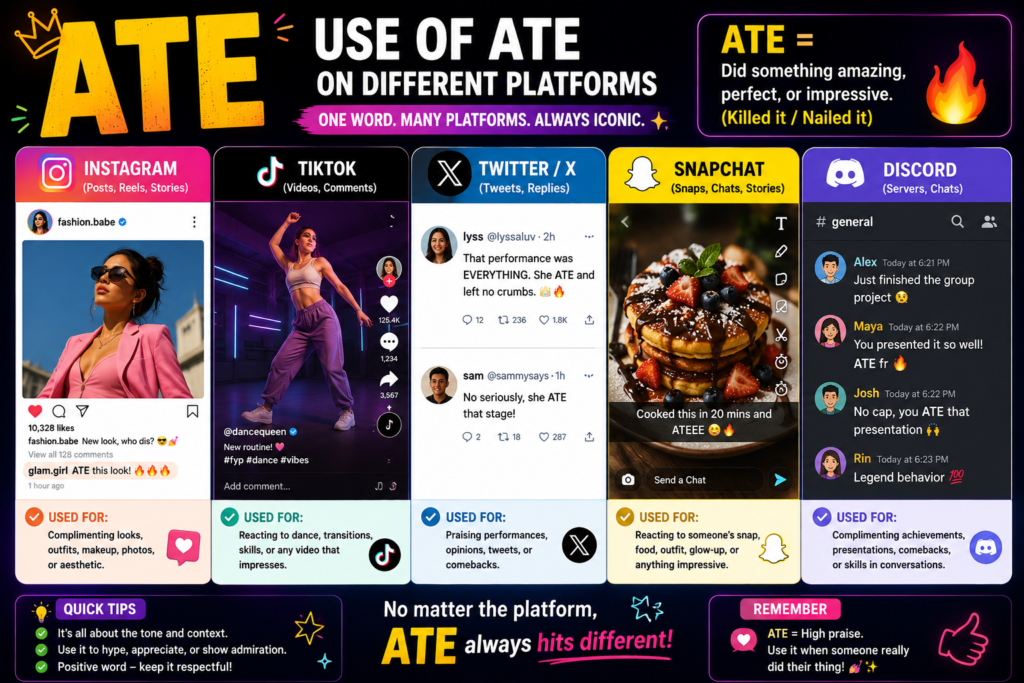
On Instagram, “ate” is common in comments under photos, reels, or posts. It’s a fast way to hype up a friend’s look, post, or content without writing a long comment.
TikTok
TikTok is where “ate” became especially popular, often tied to dance videos, outfit reveals, or lip-sync performances. Commenters use it to praise creators who nail a trend or performance.
On WhatsApp, “ate” is used more in personal chats, usually between friends reacting to photos, achievements, or updates shared directly.
ANOTHER COMMON TEXTING ABBREVIATION IS STSU
Is “Ate” an Acronym, Short Form, or Something Else?
“Ate” isn’t an acronym or abbreviation. It’s the past tense of the verb “eat,” repurposed as slang. This is called semantic shift — when a word keeps its original spelling and pronunciation but takes on a completely new meaning in a specific context. In this case, “ate” shifted from its literal meaning (consuming food) to a figurative one (performing exceptionally well).
Grammar & Language Role
Part of Speech
In slang use, “ate” functions as a verb, but it’s used figuratively rather than literally. It still follows normal sentence structure (subject + verb), even though the meaning has shifted.
Sentence Position
“Ate” typically appears:
- After a subject: “She ate.”
- With an object: “She ate that performance.”
- As a standalone reaction: “Ate.”
Can It Replace a Full Sentence?
Yes. On its own, “ate” (or “she ate,” “you ate”) can function as a complete reaction, similar to saying “that was amazing” or “you did great.”
Tone Impact
Capitalization and punctuation change intensity. “ATE” in all caps reads as more enthusiastic than lowercase “ate.” Adding emojis (🔥, 😍, 👏) amplifies the compliment further.
Formal vs Informal Use
“Ate” is strictly informal slang. It belongs in texting, social media comments, and casual conversation — not in professional writing, emails, or formal speech.Tone & Context Variations
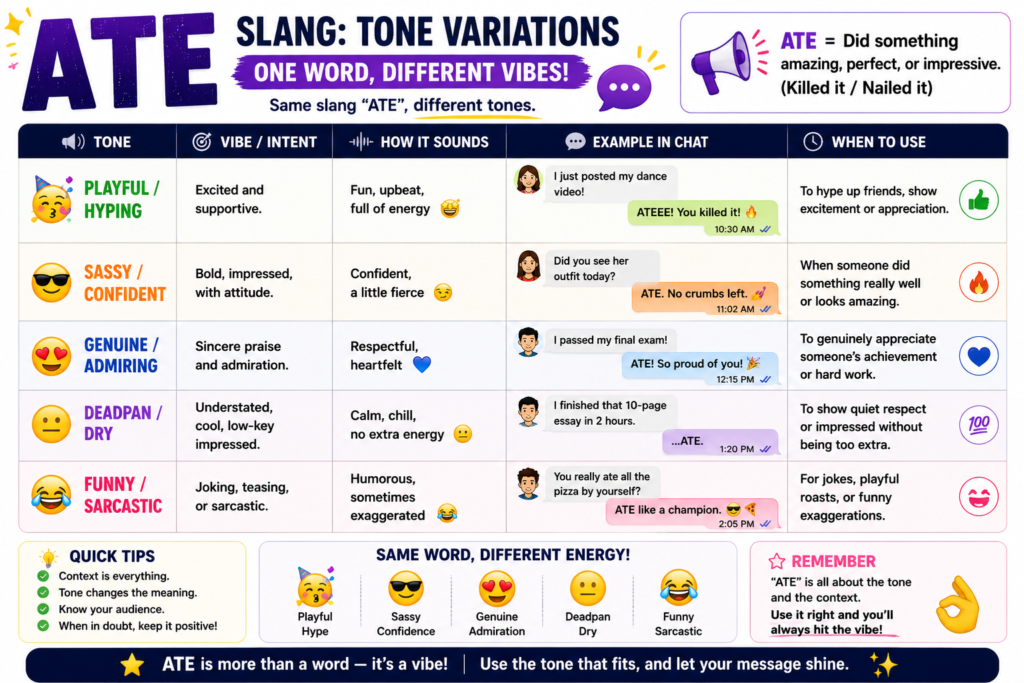
The core meaning of “ate” stays positive, but tone and context can shift how enthusiastic or sarcastic it feels.
Funny Tone
“I tripped on stage but somehow finished the dance.” “Honestly, you still ate 😂”
Sarcastic Tone
“I microwaved leftovers for dinner.” “Wow, you really ate tonight 🙄”
Romantic Tone
“Wore this new dress for our date.” “You ate, I’m speechless ❤️”
Angry Tone
“Ate” is rarely used in an angry context since it’s inherently a compliment. If used sarcastically in an argument, it usually signals frustration rather than genuine anger.
Playful Tone
“Guess who beat their personal best today?” “You ATE and you know it 😏”
Real Chat Examples (Natural Conversations)
Example 1
“Just posted my new hair color.” “You ate, the color is perfect.”
Example 2
“I finished the presentation early.” “You really ate that deadline.”
Example 3
“She wore that red dress to the party.” “She ATE, no cap.”
Example 4
“I nailed my job interview today.” “You ate!! So proud of you.”
Example 5
“Just tried this new recipe.” “Okay you literally ate, send the recipe.”
Example 6
“He hit that note perfectly in the cover.” “He ATE that song.”
Example 7
“I cleaned the whole house today.” “You ate and left no crumbs.”
Example 8
“My comeback in that argument was so good.” “Yeah, you ate for that one.”
Example 9
“She danced the whole routine without a mistake.” “She ATE the choreography.”
Example 10
“I finally organized my whole closet.” “You ate, it looks amazing.”
Example 11
“He wore that suit to the wedding.” “He ate, no notes.”
Example 12
“I posted my art project today.” “You ate this one, seriously.”
YOU MAY ALSO WANT TO KNOW ABOUT IDTS MEANS ONLINE
How to Reply When Someone Says “You Ate”
Funny Reply
“I know, I know, hold your applause 😂”
Serious Reply
“Thank you, that means a lot.”
Flirty Reply
“Only for you 😏”
Neutral Reply
“Thanks!”
Comparison Table With Similar Slang
| Slang Term | Meaning | Typical Use |
| Ate | Did something exceptionally well | Praising performance, style, or achievement |
| Slayed | Did something impressively | Similar to “ate,” used for confidence or style |
| Killed it | Performed excellently | Common in both slang and everyday speech |
| Ate and left no crumbs | Performed flawlessly, no flaws left | Emphasized version of “ate” |
| Served | Delivered a strong look or performance | Common in fashion and style contexts |
Who Uses This Term?
Age Groups
“Ate” is most popular among teens and young adults, roughly ages 13–30, particularly those active on TikTok and Instagram.
Regional Use
The term is widely understood across English-speaking countries, including the US, UK, Canada, and Australia, though it’s especially common in US-based social media culture.
Platforms Where It’s Most Common
“Ate” is most frequently used on:
- TikTok (comments and captions)
- Instagram (comments and captions)
- Twitter/X (reactions to posts)
- Group chats and DMs
Origin & Internet Culture Insight
“Ate” originated in ballroom and drag culture, where performers who delivered outstanding performances were said to have “eaten” the competition or the runway. This term is part of a broader vocabulary from Black and LGBTQ+ ballroom culture (including words like “slay,” “shade,” and “reading”) that has significantly influenced mainstream internet slang over the past decade. As with much slang from these communities, mainstream use sometimes strips away the original cultural context, so it’s worth understanding where the term comes from.
TikTok Influence
Meme Culture
TikTok played a major role in popularizing “ate,” especially through comment sections praising dance routines, outfit transitions, and lip-sync performances. It often appears alongside phrases like “no crumbs” or “the accuracy” for comedic emphasis.
Fast Typing Culture
Like most modern slang, “ate” spread partly because it’s short and instantly understood. A single word can express strong praise without needing a full sentence, which fits the fast pace of comment sections and group chats.
ALSO READ OUR OTHER BLOG ON PPTO
Is “Ate” Rude or Inappropriate?
Is It a Bad Word?
No. “Ate” isn’t offensive or vulgar. It’s a compliment, and using it is generally seen as friendly and supportive.
Can It Be Misinterpreted?
It can occasionally be confusing to someone unfamiliar with the slang, since the literal meaning (eating food) is completely different from the figurative one. Context usually makes the intended meaning clear.
Should You Use It in School or Work?
“Ate” is fine among friends and peers in casual settings, but it’s too informal for professional emails, reports, or workplace communication. Stick to the standard slang context: texting, social media, and casual conversation.
Experience-Based Insight
If you’re new to this term, the easiest way to get comfortable with it is to notice how it’s used in comment sections before using it yourself. Pay attention to who says it and in what context — it works best as genuine, enthusiastic praise rather than forced or sarcastic use, especially since it originated in a specific cultural context worth being mindful of.
Final Summary
“Ate” is slang for doing something exceptionally well. It started in ballroom and drag culture and spread through TikTok, Instagram, and everyday texting as a quick, enthusiastic compliment.
Usage Tips
Use “ate” when you want to hype someone up quickly. Capital letters and emojis add extra enthusiasm. Keep it casual and genuine.
Common Mistakes
- Using “ate” in professional or formal writing
- Assuming it’s negative or related to actual food
- Overusing it so much that it loses its impact
When to Use vs Avoid
Use it in casual chats, comments, and social media to praise someone’s look, performance, or achievement. Avoid it in emails, work messages, or formal writing where casual slang doesn’t fit.
Conclusion
Now you know what “ate” means. It’s a fun way to say someone did great. People use it on TikTok, Instagram, and in everyday chats. It’s casual, positive, and easy to use.
Save it for friends and casual conversations. Skip it in emails or work messages. Add emojis or capital letters for extra emphasis. Once you use it a few times, it’ll feel natural.
Frequently Asked Questions (FAQ)
What does ate mean in Gen Z?
It means someone did something impressively well, used as a strong compliment.
What does “ate” slang mean?
It means someone performed or looked amazing, with nothing to criticize.
What does “she ate” mean in slang?
It means she did something exceptionally well, like nailing a performance, outfit, or moment.
What does “ate” mean in a chat from a girl?
It means the same thing regardless of who says it — it’s a compliment meaning someone did great.
Is “ate” a compliment?
Yes, it’s always used as a compliment, praising confidence, skill, or style.
What does “ate and left no crumbs” mean?
It means someone did something so perfectly that there’s nothing left to critique.
Is “ate” the same as “slayed”?
They’re very similar and often used interchangeably, both meaning someone performed impressively.
2 thoughts on “Ate Meaning Slang: What It Means & How to Use It”