
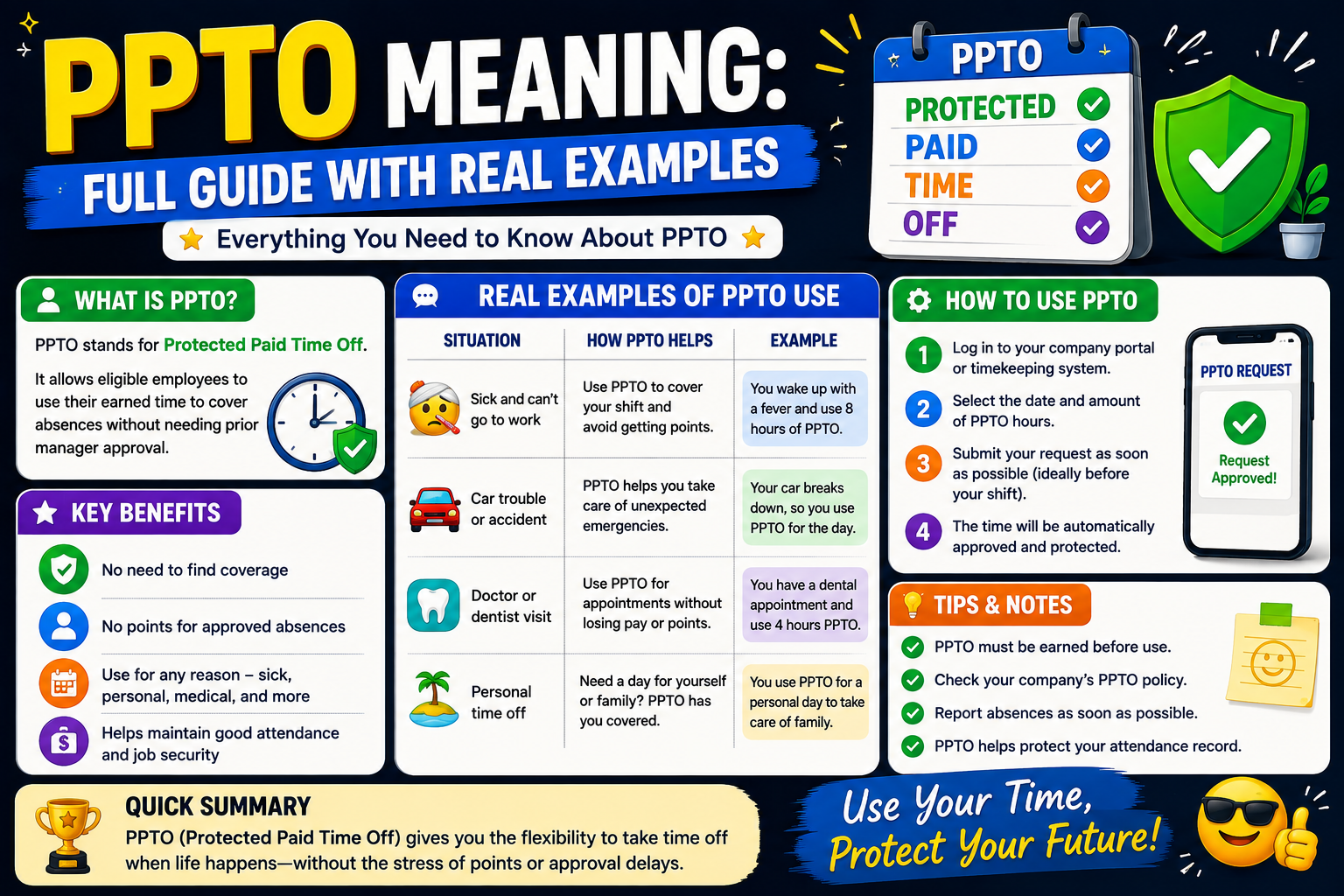
Ever heard someone at Walmart mention “PPTO” and wonder what it means? It stands for Protected Paid Time Off. It’s a special kind of paid leave for unplanned absences. Think sick days, emergencies, or car trouble.
What makes PPTO different is the “protected” part. It covers you for missed shifts without hurting your attendance record. No approval needed either. This guide breaks down exactly how it works, with real examples.
What Does PPTO Mean?
PPTO means Protected Paid Time Off. It’s one of two paid time off “buckets” Walmart gives eligible hourly associates, the other being regular PTO. The word “protected” is the key part — using PPTO for an absence shields the employee from attendance occurrences or points, which regular PTO doesn’t do.
Why People Search for PPTO Meaning
Most people searching “PPTO meaning” fall into two groups: current or new Walmart employees trying to understand their benefits, and people who saw the term used casually on TikTok or Reddit and want to know what it actually stands for. Because Walmart uses PPTO differently than most retailers use standard sick time, the term doesn’t have an obvious meaning outside the company.
PPTO Meaning Explained in Simple Words
Think of PPTO as Walmart’s built-in excuse for life happening. If you wake up sick, your car won’t start, or a family emergency comes up, you can use PPTO to get paid for missing work — and it won’t count against your attendance record, as long as you have enough balance to cover it.
Is PPTO an Acronym?
Yes. PPTO is a true acronym, standing for Protected Paid Time Off. Each letter represents one word in the phrase, and it’s read letter by letter rather than as a single word.
Is PPTO a Short Form?
In a sense, yes — it’s shorthand for a specific HR policy rather than general slang. Unlike internet abbreviations that evolve informally, PPTO is an official company term defined in Walmart’s associate policies.
Is PPTO Internet Slang?
Not originally. PPTO started as formal Walmart HR terminology. It only shows up in “slang” contexts because employees casually reference it in TikTok videos, Reddit threads, and workplace conversations — not because it was created as internet shorthand like terms such as SOL or DNI.
Is PPTO Used on Snapchat, TikTok, Instagram, or WhatsApp?
PPTO does show up on these platforms, but almost always in a workplace context rather than casual chat slang. On TikTok, it’s common in videos where Walmart employees explain their benefits or vent about attendance policies.
On Reddit, especially in Walmart-related subreddits, it’s frequently discussed in questions like “how much PPTO do I have” or “can PPTO be denied.” It’s far less common on Snapchat, Instagram, or WhatsApp, since those platforms lean more personal than work-related.
How PPTO Works
Step 1: Employees Earn PPTO
Eligible hourly associates start earning PPTO from their date of hire, based on hours worked. Earning rates and yearly maximums vary depending on job type and length of service, and Walmart publishes the exact rates in its internal associate resources.
Step 2: Employee Needs Time Off
When something unexpected comes up — illness, a family issue, transportation problems — the employee can request PPTO through the Me@Walmart app or the GTA (Global Time and Attendance) portal.
Step 3: PPTO Is Applied
If the employee doesn’t have enough regular PTO to cover a request, the system automatically applies PPTO instead. Associates can also choose which balance to use when requesting time off.
Step 4: Attendance Protection Applies
Once PPTO is applied to an absence, that absence is excused. It won’t add attendance points or occurrences to the employee’s record, as long as enough PPTO balance covers it.
PPTO vs PTO: What’s the Difference?
| Feature | PTO (Regular) | PPTO (Protected) |
| Requires manager approval | Yes | No — automatically approved |
| Can be denied | Yes, based on staffing needs | No |
| Removes attendance points | No | Yes |
| Best used for | Planned absences (vacations, appointments) | Unplanned absences (sickness, emergencies) |
| Documentation required | Sometimes | No |
The core difference comes down to protection. Regular PTO pays you for time off, but it doesn’t shield you from attendance consequences if the absence is unplanned. PPTO does both — it pays you and clears the attendance impact.
YOU MAY ALSO WANT TO KNOW ABOUT RTPS MEANS ONLINE
Examples of PPTO in Real Life
Example 1: Sick Day
An associate wakes up with a fever and can’t make their shift. They call in and apply PPTO to the absence, getting paid without any attendance point.
Example 2: Family Emergency
A parent needs to leave work suddenly because their child got hurt at school. PPTO covers the missed hours and protects their attendance record.
Example 3: Car Trouble
An employee’s car won’t start and they can’t find another way to work. Using PPTO covers the missed shift without a point.
Example 4: Medical Appointment
An associate needs an unplanned doctor’s visit that conflicts with their shift. PPTO can be applied since it wasn’t scheduled in advance.
Example 5: Personal Emergency
A sudden personal issue — like a plumbing disaster at home — keeps someone from getting to work on time. PPTO protects the late arrival from counting against them.
Tone and Context Variations
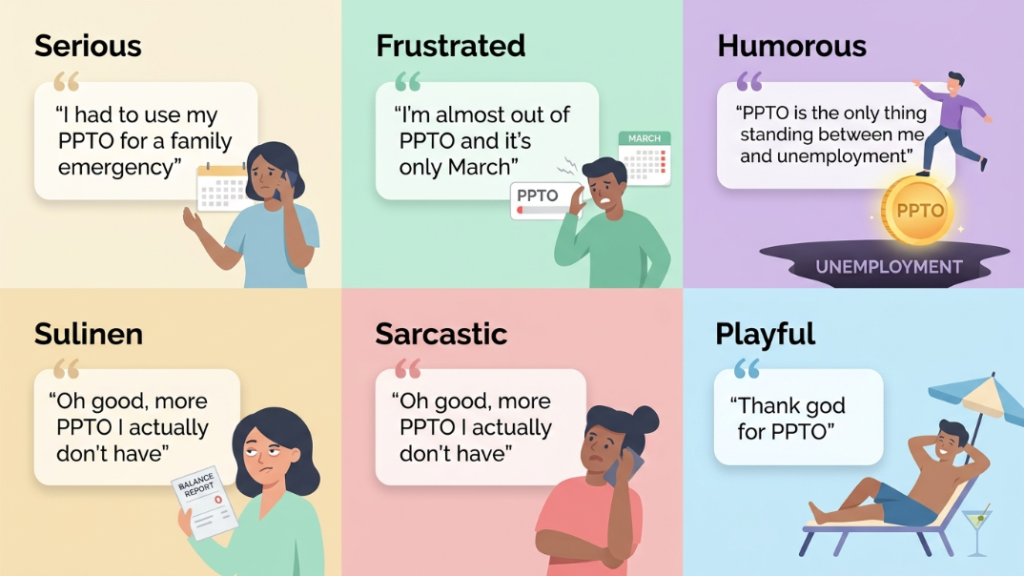
The way people talk about PPTO shifts depending on the situation:
- Serious tone: “I had to use my PPTO for a family emergency” — straightforward and factual.
- Frustrated tone: “I’m almost out of PPTO and it’s only March” — venting about limited balance.
- Humorous tone: “PPTO is the only thing standing between me and unemployment” — exaggerated, joking about relying on it.
- Sarcastic tone: “Oh good, more PPTO I don’t actually have” — mocking a shortage of hours.
- Playful tone: “Thank god for PPTO” said after narrowly avoiding a point — lighthearted relief.
Real Workplace Conversation Examples
| Example | Context |
| “Can you cover my shift? I’m using PPTO, I’m sick.” | Calling out sick |
| “I don’t have enough PPTO left for this week.” | Balance running low |
| “Does PPTO cover late arrivals too?” | Clarifying policy |
| “My manager said PPTO is automatic, no approval needed.” | Explaining the process |
| “I saved my PPTO in case something comes up later.” | Planning ahead |
| “PPTO saved me from a point today.” | Attendance protection in action |
| “How do I check my PPTO balance in the app?” | Checking hours |
| “I used PTO instead of PPTO by mistake.” | Mixing up the two balances |
Why Employers Offer PPTO
Walmart introduced PPTO to standardize paid sick leave across locations, including states that don’t legally require it. It also gives the company a consistent attendance policy nationwide, while still giving employees flexibility to miss work for legitimate reasons without being penalized.
For employees, it functions as a safety net for the unpredictable parts of life — illness, family needs, and emergencies — without needing to justify or document the reason.
Grammar and Language Role of PPTO
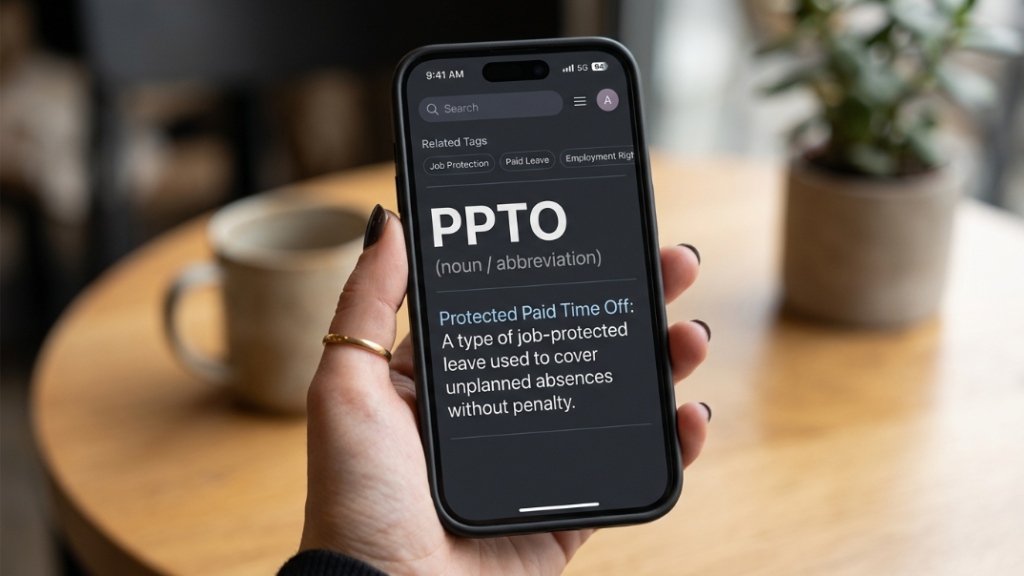
Part of speech: PPTO functions as a noun, referring to a specific type of paid leave balance (“I used my PPTO”).
Sentence position: It typically appears as the object of a verb like “use,” “apply,” or “have” — “I used PPTO,” “I have PPTO left.”
Does PPTO replace a full sentence? No. Unlike internet slang such as “DNI” or “SOL,” PPTO is a noun referring to a specific policy, not a shorthand for a full sentence or idea.
Tone impact: PPTO carries a neutral, workplace tone. It doesn’t imply humor or frustration on its own — the surrounding words set the tone.
Formal vs. informal use: PPTO works in both formal HR conversations and casual employee chats, since it’s an official policy term rather than slang.
ANOTHER COMMON TEXTING ABBREVIATION IS AITA
How to Reply When Someone Mentions PPTO
- Neutral reply: “Got it, thanks for letting me know.”
- Professional reply: “No problem, I’ll note that in the schedule.”
- Supportive reply: “Hope everything’s okay, take the time you need.”
- Friendly reply: “No worries, feel better!”
- Humorous reply: “PPTO to the rescue again, huh?”
PPTO vs Similar Workplace Terms
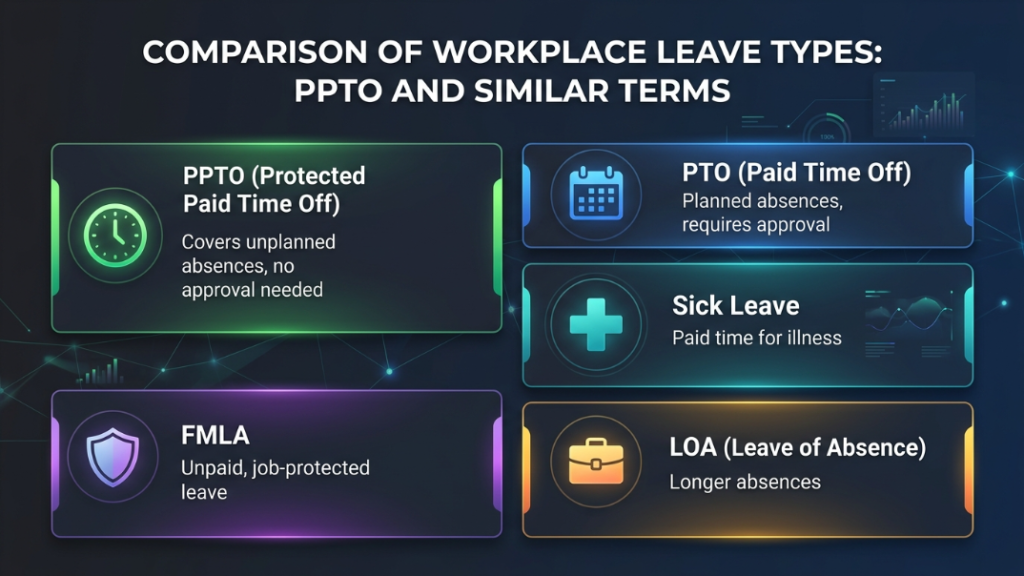
| Term | Meaning | Key Difference |
| PPTO | Protected Paid Time Off | Covers unplanned absences, no approval needed |
| PTO | Paid Time Off | Covers planned absences, requires approval |
| Sick leave | Paid time specifically for illness | Some states mandate this separately from PPTO |
| FMLA | Family and Medical Leave Act | Unpaid, job-protected leave for serious conditions, separate from PPTO |
| LOA | Leave of Absence | Used for longer absences beyond a few days |
Who Uses PPTO?
Age Groups
PPTO is used across all age groups working hourly retail jobs, though younger employees are more likely to discuss it publicly on social platforms like TikTok and Reddit.
Gen Z vs Millennials
Gen Z employees tend to be more vocal about PPTO online, often posting explainer videos or asking questions in public forums. Millennials are more likely to discuss it privately with coworkers or HR directly.
Geographic Usage
Since PPTO is a Walmart-specific benefit, its use isn’t tied to a particular U.S. region — it applies everywhere Walmart operates, though exact accrual rates can vary slightly in states with their own paid sick leave laws.
Platforms Where PPTO Is Discussed
Reddit and TikTok are the two most common places PPTO comes up outside of work, usually in threads or videos about Walmart employment, attendance policies, or benefits comparisons.
Origin of PPTO
PPTO isn’t internet slang with a viral origin story — it’s a formal HR term Walmart created to structure its paid time off system into two categories: PTO for planned time off and PPTO specifically for unplanned or emergency situations. It exists partly to comply with paid sick leave laws in certain states and partly to give Walmart one consistent attendance policy nationwide.
Why People Talk About PPTO on TikTok
PPTO comes up on TikTok mainly through Walmart employee content — videos explaining how the policy works, warning new hires not to burn through their balance too early, or venting about how quickly PPTO gets used up. It’s less about the term being trendy and more about employees sharing practical workplace knowledge with each other.
PPTO and Workplace Culture
PPTO has become a normal part of how Walmart employees talk about attendance and reliability. Because it removes the fear of getting an attendance point for a legitimate emergency, it shapes how associates plan their time off — many save PPTO specifically for emergencies rather than using it for planned days off, since regular PTO already covers those.
Is PPTO Rude?
No. PPTO is a neutral workplace term, not slang with an edge to it. Mentioning that you used PPTO is a normal, professional way to explain an absence.
Is PPTO a Bad Word?
No. It has no vulgar or inappropriate origin — it’s simply an HR acronym for a paid leave policy.
Can You Use PPTO at School?
Not applicable in the traditional sense, since PPTO is an employment benefit, not a school policy. However, student employees working at Walmart while in school can still use PPTO for their work shifts, separate from any school attendance policy.
KNOW ABOUT PTSO READ THIS ONE ALSO
Can You Use PPTO in the Office?
Yes, if you’re a Walmart employee — PPTO applies to eligible hourly field and campus/corporate associates. Outside of Walmart, the term doesn’t apply, since PPTO is specific to Walmart’s internal policy rather than a general workplace standard.
Experience-Based Insight
For employees, understanding PPTO usually comes down to one practical habit: check your balance before assuming you’re covered. Since PPTO is capped and resets with the plan year, using it too freely on non-emergencies can leave you without protection later when something truly unplanned happens. Many associates learn to treat it as a reserve rather than a first option, saving regular PTO for anything they can plan ahead of time.
Final Thoughts
PPTO stands for Protected Paid Time Off, a Walmart benefit designed to cover unplanned absences without putting an employee’s attendance record at risk. It’s different from regular PTO mainly in two ways: it doesn’t need approval, and it actively protects against attendance points. Understanding how and when to use it can help employees avoid unnecessary points while saving their regular PTO for planned time away.
Quick Usage Tips
- Save PPTO for real emergencies rather than routine days off.
- Check your balance regularly through the Me@Walmart app before assuming you’re covered.
Common Mistakes to Avoid
- Confusing PPTO with regular PTO when requesting time off.
- Running out of PPTO early in the year and having no protection left for a real emergency later.
When to Use PPTO
For sudden illness, family emergencies, transportation issues, or any unplanned situation that keeps you from your shift.
When to Avoid Using PPTO
For planned events like vacations or scheduled appointments, where regular PTO is the more appropriate choice.
Conclusion
So that’s what PPTO really means. It stands for Protected Paid Time Off. It covers unplanned absences and keeps your attendance record clean. No manager approval needed either.
Just use it wisely. Save it for real emergencies, not planned days off. Check your balance often so you’re never caught without it.
Frequently Asked Questions
What does PPTO stand for?
PPTO stands for Protected Paid Time Off. It’s a Walmart benefit for unplanned absences.
What does PPTO mean at Walmart?
It stands for Protected Paid Time Off — a paid leave balance that covers unplanned absences and protects employees from attendance points.
What’s the difference between PPTO and PTO?
PTO requires manager approval and doesn’t protect against attendance points. PPTO is automatically approved and does protect against attendance points.
Can PPTO be denied?
No. Unlike regular PTO, PPTO requests can’t be denied by a manager.
Do I need a reason to use PPTO?
No documentation is typically required — PPTO can be used for any reason, planned or unplanned.
How do I check my PPTO balance?
Through the Me@Walmart app or the Global Time and Attendance (GTA) portal.
Is PPTO only for Walmart employees?
Yes, PPTO is a Walmart-specific term. Other companies may offer similar sick leave benefits, but they don’t use the same name or structure.
What happens if I run out of PPTO?
You’ll need to wait until you earn more before it can protect any additional absences. Until then, absences may result in attendance points if not covered by regular PTO.