
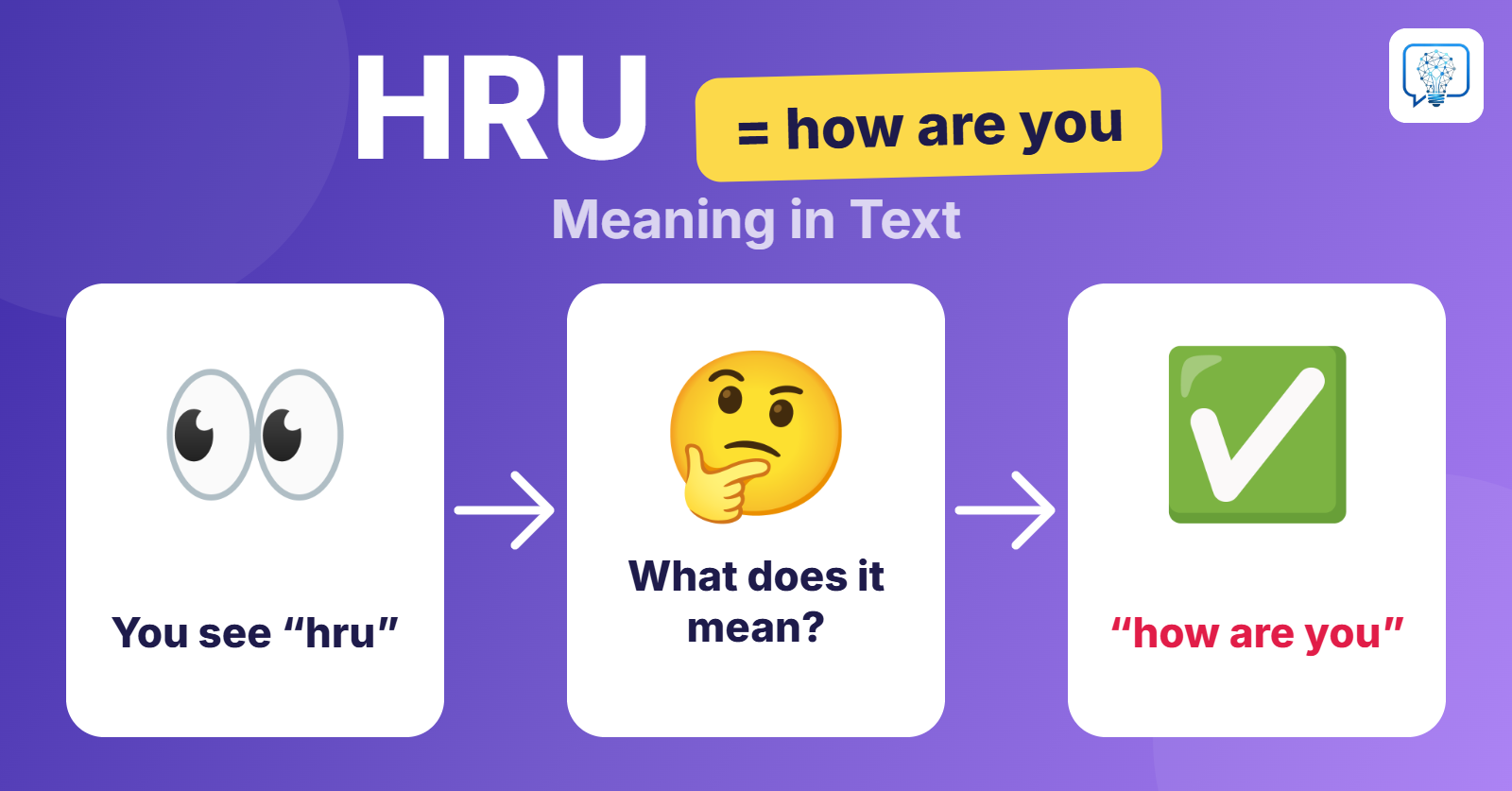
“hey hru?” is one of the most common ways to start a chat. It’s a quick check-in, the same as saying “how are you?” out loud.
Quick answer: HRU means “how are you?” Dictionary.com notes that the R is short for “are,” like in “r u ok?”.
What people mean by “hru”
Most of the time, it’s a friendly opener, not a deep question. But it can carry more weight:
| Message | What they likely want |
|---|---|
| “heyy hru” | Just starting a conversation |
| “hru doing today?” | Checking in, a bit more caring |
| “hru holding up?” (after bad news) | Genuine concern; they want a real answer |
| “long time no talk, hru” | Reconnecting after a while |

How to reply to HRU
- Quick and friendly: “good, hbu?” or “not bad, wbu?”
- With a little news: “tired but good, just finished work. you?”
- If you’re not okay: it’s fine to be honest with people you trust: “honestly not great today.”
Asking back (“hbu?” = how about you) keeps the chat going and shows you care too.
Real chat examples
- A: “hey stranger! hru”
- B: “omg hi! good, been so busy with exams. hbu?”
- A: “heard about your dad being sick, hru”
- B: “thanks for asking, it’s been a rough week”

Is HRU rude?
No. It’s friendly. With teachers, managers or people you don’t know well, write it out in full: “Hi, how are you?”